Introduction
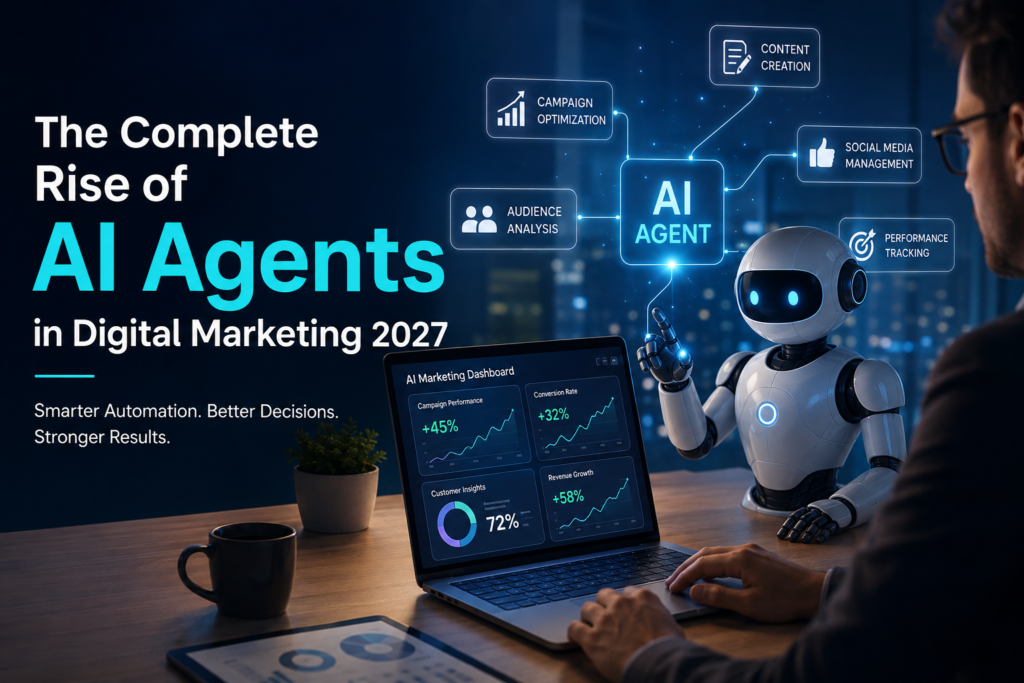
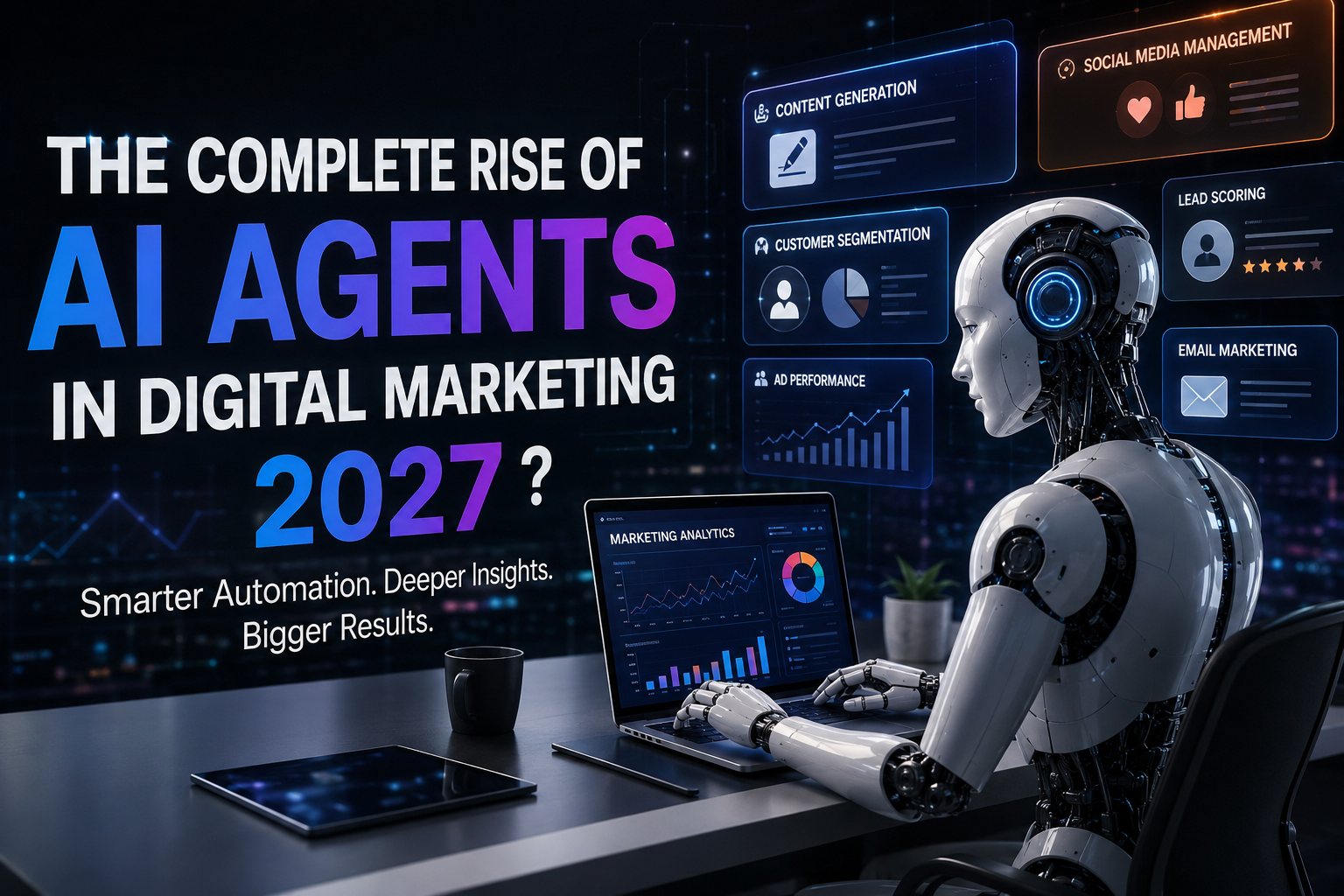
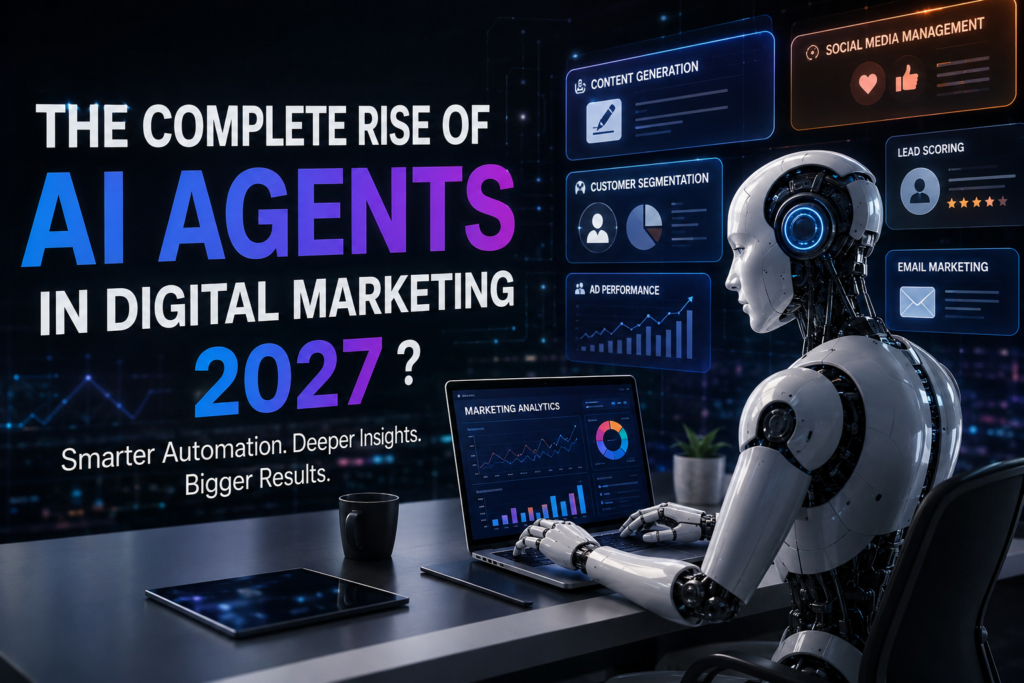
The Complete Rise of AI Agents in Digital Marketing 2027 Artificial Intelligence has already revolutionized digital marketing, but 2027 marks the beginning of an even bigger transformation—the rise of AI agents. Unlike traditional AI tools that simply generate content or answer prompts, AI agents can think, plan, execute tasks, analyze results, and continuously improve campaigns with minimal human intervention. They are becoming virtual team members capable of handling everything from customer service and content AI Tools creation to ad optimization and sales automation.
Businesses that adopt AI agents early will gain a significant competitive advantage through faster execution, lower operational costs, personalized customer experiences, and data-driven decision-making. In this guide, we’ll explore what AI agents are, how they work, their benefits, use cases, challenges, and why they are shaping AI Tools the future of digital marketing.
What Are AI Agents?
AI agents are intelligent software systems designed to complete tasks independently. They don’t just respond to commands—they understand objectives, make decisions, use various tools, and adjust their actions based on results.
For example, instead of asking an AI tool to write one blog post, an AI marketing agent can:
- Research trending topics
- Analyze competitors
- Generate an SEO-friendly outline
- Write the article
- Create social media posts
- Publish the content
- Monitor rankings
- Suggest improvements
This level of automation allows marketers to focus on strategy instead of repetitive tasks.
Why AI Agents Are Becoming Popular
Several factors are driving the rapid adoption of AI agents:
- Better language models
- Faster cloud computing
- Affordable AI tools
- Increased marketing competition
- Demand for personalized customer experiences
- Growing need for automation
Companies want to do more with smaller teams, and AI agents provide exactly that opportunity.
How AI Agents Differ from Traditional AI Tools
Traditional AI tools generally require human input at every step. AI agents, however, can perform multi-step workflows independently.
Traditional AI
- Generates content from prompts
- Answers questions
- Requires manual instructions
- Limited automation
AI Agents
- Plan complete workflows
- Execute multiple tasks
- Learn from previous results
- Connect with various marketing tools
- Make intelligent recommendations
This makes AI agents significantly more valuable for modern businesses.
Benefits of AI Agents in Digital Marketing
1. Faster Campaign Execution
AI agents can complete hours of work within minutes.
Instead of spending days creating a campaign, marketers can launch one in a few hours.
2. 24/7 Marketing Operations
Unlike human teams, AI agents never sleep.
They can:
- Reply to customer inquiries
- Monitor ad performance
- Publish content
- Generate reports
- Track competitors
around the clock.
3. Better Personalization
Customers now expect personalized experiences.
AI agents analyze customer behavior and automatically deliver:
- Personalized emails
- Product recommendations
- Dynamic website content
- Custom offers
- Personalized advertisements
This increases customer satisfaction and conversion rates.
4. Improved Decision-Making
AI agents process enormous amounts of marketing data in real time.
They can identify:
- Best-performing campaigns
- Low-converting landing pages
- High-value customer segments
- Keyword opportunities
- Content gaps
These insights help marketers make smarter decisions.
5. Lower Marketing Costs
Businesses can automate repetitive tasks such as:
- Data analysis
- Lead qualification
- Email automation
- Content scheduling
- Reporting
This reduces operational expenses while improving productivity.
AI Agents in Content Marketing
Content marketing is one of the biggest beneficiaries of AI agents.
An AI content agent can:
- Research keywords
- Analyze competitors
- Generate content ideas
- Write blog articles
- Optimize SEO
- Create meta descriptions
- Design social media captions
- Suggest internal links
- Update old content
Instead of managing multiple tools, marketers can rely on one intelligent system.
AI Agents for SEO
Search Engine Optimization has become increasingly data-driven.
AI SEO agents help marketers by:
- Finding low-competition keywords
- Monitoring Google rankings
- Performing website audits
- Fixing technical SEO issues
- Creating optimized content
- Building internal linking structures
- Suggesting schema markup
- Identifying backlink opportunities
They continuously monitor search performance and recommend improvements automatically.
AI Agents in Social Media Marketing
Managing multiple social media platforms can be overwhelming.
AI agents simplify this by:
- Creating content calendars
- Writing captions
- Designing post ideas
- Scheduling posts
- Monitoring engagement
- Responding to comments
- Identifying viral trends
- Tracking competitors
This ensures consistent brand visibility across platforms.
AI Agents for Paid Advertising
Digital advertising requires constant optimization.
AI advertising agents can:
- Analyze campaign performance
- Adjust bidding strategies
- Pause underperforming ads
- Allocate budget automatically
- Generate ad copy
- Test multiple creatives
- Improve audience targeting
- Predict campaign outcomes
This leads to higher return on ad spend (ROAS).
AI Agents in Email Marketing
Email marketing remains one of the highest ROI marketing channels.
AI email agents can:
- Segment subscribers
- Personalize email content
- Optimize subject lines
- Schedule emails
- Predict open rates
- Recommend products
- Automate follow-ups
- Remove inactive subscribers
The result is improved engagement and higher conversions.
AI Agents for Customer Support
Modern customers expect instant responses.
AI customer support agents can:
- Answer FAQs
- Resolve simple issues
- Recommend products
- Track orders
- Schedule appointments
- Collect customer feedback
When necessary, they can seamlessly transfer conversations to human agents .AI Tools
AI Agents for Lead Generation
Finding quality leads takes significant time.
AI agents automate lead generation by:
- Identifying potential customers
- Collecting contact information
- Scoring leads
- Sending outreach emails
- Scheduling meetings
- Following up automatically
Sales teams receive qualified leads instead of cold prospects.
AI Agents for Data Analysis
Marketing generates massive amounts of data.
AI analytics agents transform this data into actionable insights.
They monitor:
- Website traffic
- User behavior
- Conversion rates
- Bounce rates
- Campaign ROI
- Customer journeys
- Sales funnels
Instead of manually reviewing dashboards, marketers receive intelligent recommendations.
AI Agents and Marketing Automation
Marketing automation is evolving beyond simple workflows.
Traditional automation follows fixed rules.
Example:
“If customer downloads an ebook, send Email A.”
AI agents go much further.
They analyze customer behavior and decide the best next action.
For example:
“If the customer watches three videos, visits the pricing page twice, ignores promotional emails, and downloads a case study, schedule a sales consultation invitation.”
This level of intelligence dramatically improves customer journeys.
Popular Use Cases of AI Agents
Businesses are using AI agents for:
- Content creation
- SEO optimization
- PPC campaign management
- Lead nurturing
- Customer support
- CRM updates
- Market research
- Competitor analysis
- Product recommendations
- Marketing reports
- Sales forecasting
- Website optimization
Their applications continue to expand every month.
Challenges of AI Agents
Despite their advantages, AI agents have some limitations.
(a) Data Privacy
Businesses must protect customer information and comply with privacy regulations.
(b) Human Oversight
AI agents should not operate without supervision.
Humans still need to review strategy, branding, and sensitive communications.
( c) Accuracy
AI can occasionally generate incorrect information.
Verification remains essential.
(d) Brand Voice
AI-generated content should always match the company’s unique brand identity.
(e)Technical Integration
Businesses may need to integrate AI agents with:
- CRM software
- Email platforms
- Analytics tools
- Marketing automation systems
- E-commerce platforms
Proper setup ensures maximum efficiency.
Best AI Agent Applications for Digital Marketing
Many businesses are already using AI-powered marketing assistants, including:
- ChatGPT Agents
- Claude
- Google Gemini
- Microsoft Copilot
- Salesforce Agentforce
- HubSpot AI
- Zapier AI Agents
- n8n AI Workflows
- LangChain-based AI Agents
- CrewAI
- AutoGen
- OpenAI API Agents
These tools help automate marketing workflows at scale.
The Future of AI Agents
The next generation of AI agents will become even more autonomous.
Future capabilities may include:
- Fully automated marketing departments
- AI-managed advertising campaigns
- Voice-powered marketing assistants
- Autonomous e-commerce optimization
- Real-time customer journey personalization
- AI-generated video campaigns
- Predictive customer behavior modeling
- Cross-platform campaign management
- Autonomous influencer marketing
- AI-driven brand management
Businesses that embrace these innovations will be better positioned for long-term success.
Should Small Businesses Use AI Agents?
Absolutely.
AI agents are no longer limited to large enterprises.
Small businesses can use them to:
- Save time
- Reduce marketing costs
- Improve customer service
- Generate more leads
- Increase website traffic
- Scale content production
- Boost online sales
Many AI platforms now offer affordable pricing, making advanced automation accessible to startups and local businesses.
Conclusion
The rise of AI agents represents one of the most significant shifts in the history of digital marketing. Unlike traditional automation tools, AI agents can plan, execute, optimize, and continuously improve marketing activities with minimal human intervention From SEO and content marketing to paid advertising, email campaigns, customer support, and lead generation, these intelligent systems are transforming how businesses attract and retain customers.
However, successful implementation still requires human creativity, strategic thinking, ethical oversight, and quality control. Organizations that combine human expertise with AI-powered automation will achieve the best results.
As AI technology continues to evolve, AI agents will become indispensable partners for marketers, enabling faster growth, smarter decision-making ,AI Tools, and highly personalized customer experiences. Businesses that start adopting AI agents today will be better prepared to compete in the rapidly changing digital landscape of 2027.