Introduction
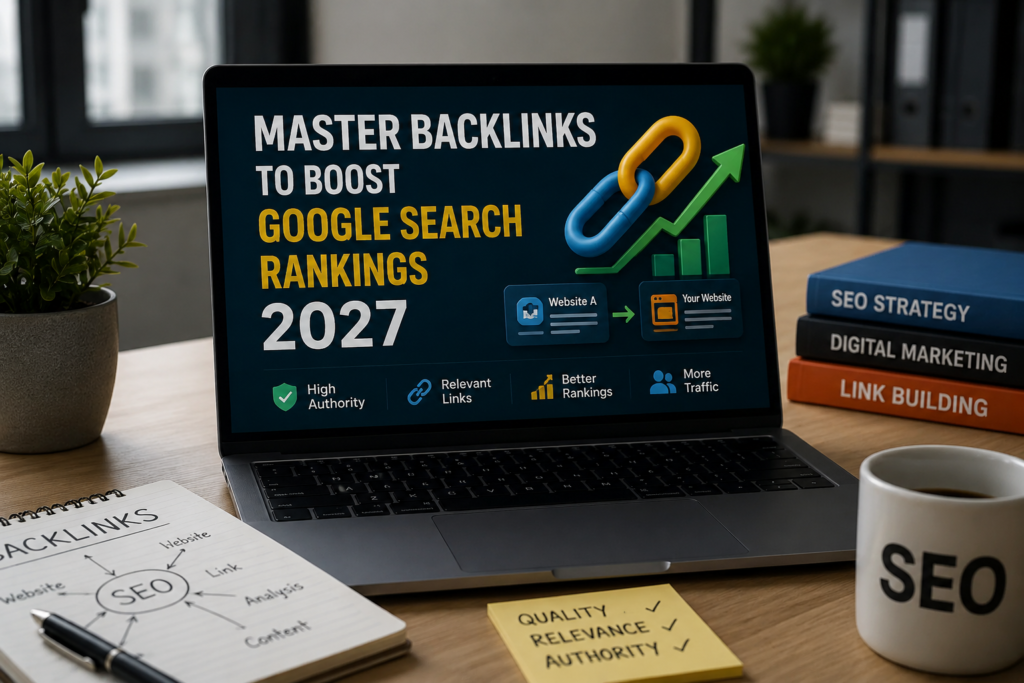
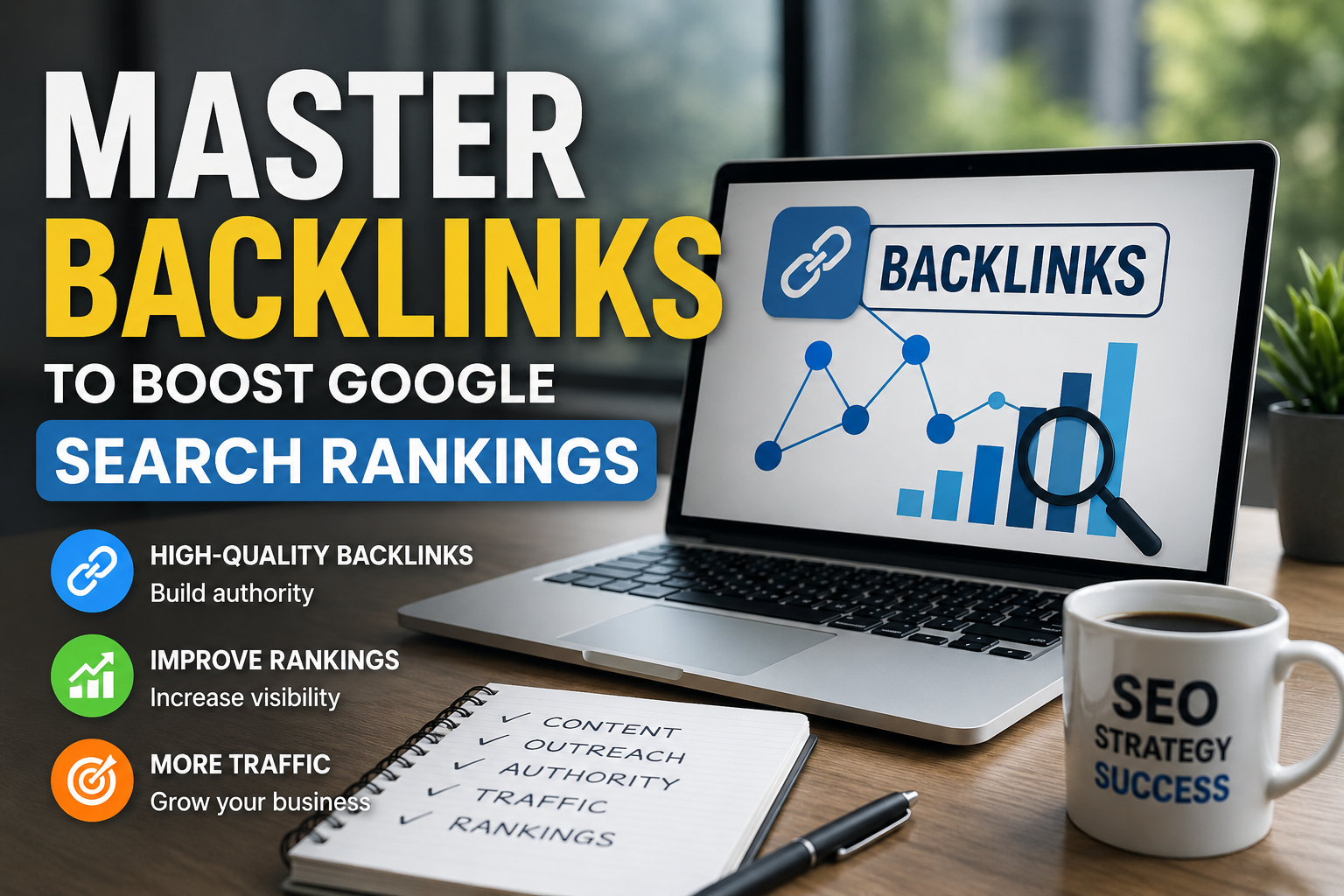
Master Backlinks to Boost Google Search Rankings 2027 ? If you want your website to rank higher on Google, mastering backlinks is one of the smartest Search Engine Optimization strategies you can invest in. Backlinks act as trust signals that tell search engines your content is valuable, relevant, and worth recommending to users. The more high-quality websites that link to your pages, the greater your chances of improving search rankings, increasing organic traffic, and building online authority. However, not all backlinks deliver the same value. Understanding how backlinks work and learning the right techniques to earn them can make a significant difference in your Search Engine Optimization success. In this guide, you’ll discover what backlinks are, why they matter, and the most effective strategies to build a strong backlink profile that supports long-term growth and better Google rankings.
What Is a Backlink?
A backlink (also known as an inbound link or incoming link) is a hyperlink from one website that points to another website.
For example:
- Website A publishes an article about digital marketing.
- Within that article, it links to your SEO guide.
- That link pointing to your website is called a backlink.
Search engines use backlinks to discover new pages and determine how trustworthy and authoritative a website is.
The basic idea is simple: if reputable websites are linking to your content, your content is probably valuable.
Why Are Backlinks Important?
Backlinks influence SEO in several ways.
1. Improve Google Rankings
Google considers backlinks one of its strongest ranking signals.
When authoritative websites link to your content, Google interprets those links as endorsements. Pages with strong backlink profiles generally rank higher than similar pages without backlinks.
2. Increase Website Authority
Backlinks help build your website’s authority over time.
Authority means Google trusts your website enough to recommend it in search results.
As your authority grows, it becomes easier to rank not only one page but your entire website.
3. Drive Referral Traffi
Backlinks don’t only help Search Engine Optimization.
People reading another website can click your link and visit your site directly.
This traffic is known as referral traffic and often has high engagement because users already trust the website referring them.
4. Faster Indexing
Search engines discover pages by following links.
When authoritative websites link to your new page, Google can find and index it more quickly.
5. Build Brand Credibility
Being mentioned by respected websites improves your reputation.
When users repeatedly see your business referenced by trusted sources, your brand becomes more recognizable and trustworthy.
How Google Uses Backlinks
Google analyzes several factors before deciding how much value a backlink passes.
These include:
- Website authority
- Page relevance
- Link placement
- Anchor text
- Link quality
- Link freshness
- Number of outgoing links
- Spam signals
Google doesn’t simply count backlinks—it evaluates their quality.
Types of Backlinks
1. DoFollow Backlinks
These are standard backlinks that pass Search Engine Optimization value (often called “link juice”).
Example:
<a href=”https://example.com”>SEO Guide</a>
These links help improve rankings.
2. NoFollow Backlinks
NoFollow links contain an attribute that tells search engines not to pass ranking authority directly.
Example:
rel=”nofollow”
Although they pass less Search Engine Optimization value, they can still generate referral traffic and increase brand visibility.
3. Sponsored Links
Sponsored links identify paid partnerships or advertisements.
Example:
rel=”sponsored”
These help Google distinguish advertising from editorial links.
4. UGC Links
UGC stands for User Generated Content.
These links appear in:
- Forums
- Blog comments
- Community discussions
- User profile
High-Quality vs Low-Quality Backlinks
High-Quality Backlinks
Characteristics include:
- From trusted websites
- Relevant to your industry
- Editorially placed
- Natural anchor text
- High traffic websites
- Genuine recommendations
Examples include:
- Government websites
- Educational institutions
- Popular blogs
- Industry publications
- Well-known news websites
Low-Quality Backlinks
Characteristics include:
- Spam websites
- Link farms
- Irrelevant websites
- Paid links
- Auto-generated links
- Private Blog Networks (PBNs)
These links can negatively affect yourSearch Engine Optimization if they violate Google’s guidelines.
What Makes a Good Backlink?
Google looks for several quality signals.
(a) Relevance
A backlink from an SEO blog is much more valuable for an SEO website than a backlink from an unrelated niche.
Relevant links provide stronger contextual signals.
(b)Authority
Links from established websites carry more weight.
Authority is earned through years of publishing valuable content and receiving trusted backlinks.
(c)Traffic
Backlinks from websites with real visitors are generally more valuable than links from inactive websites.
(d)Placement
Links placed naturally inside the main article content perform better than links hidden in footers or sidebars.
(e) Anchor Text
Anchor text is the clickable text within a hyperlink.
Good examples:
- SEO guide
- Digital marketing strategies
- Local SEO checklist
Avoid excessive use of exact-match keywords, as over-optimization can appear manipulative.
How Backlinks Help SEO
Backlinks improve SEO by:
- Increasing trust
- Improving authority
- Helping pages rank faster
- Bringing referral traffic
- Supporting faster indexing
- Strengthening topical relevance
- Enhancing brand awareness
Combined with quality content, backlinks remain one of the strongest long-term SEO assets.
How to Earn High-Quality Backlinks
1. Create Exceptional Content
The best backlinks come naturally when your content provides unique value.
Examples include:
- Ultimate guides
- Original research
- Case studies
- Statistics
- Infographics
- Free tools
- Templates
- Checklists
People naturally reference content that solves problems.
2. Guest Posting
Write valuable articles for reputable websites in your niche.
Include a relevant link back to your website where appropriate.
Focus on quality publications rather than mass guest posting.
3. Broken Link Building
Find broken links on other websites and suggest your relevant content as a replacement.
This helps the website owner while earning you a backlink.
4. Digital PR
Publish newsworthy content such as:
- Industry reports
- Surveys
- Research findings
- Product launches
- Expert opinions
Journalists often link to original sources.
5. Resource Pages
Many websites maintain pages listing helpful tools or resources.
If your content adds value, you can request inclusion.
6. Skyscraper Technique
Identify popular content in your niche.
Create a significantly better, more comprehensive version.
Then reach out to websites linking to the original resource and introduce your improved content.
7. Build Relationships
Networking with bloggers, industry experts, and businesses often leads to natural collaboration opportunities and backlinks.
Backlink Mistakes to Avoid
Avoid practices that can harm your SEO, including:
- Buying backlinks
- Participating in link exchanges solely for SEO
- Using automated backlink software
- Building links from irrelevant websites
- Creating spammy blog comments
- Overusing exact-match anchor text
- Relying on Private Blog Networks (PBNs)
Google’s algorithms are increasingly effective at detecting manipulative link-building tactics.
How to Check Your Backlinks
Several SEO tools can help monitor your backlink profile, including:
- Google Search Console
- Ahrefs
- Semrush
- Moz
- Majestic
- SE Ranking
These tools show:
- Total backlinks
- Referring domains
- Anchor texts
- Lost links
- New links
- Toxic backlinks
- Domain authority metrics
Regular monitoring helps identify opportunities and potential issues.
Final Thoughts
Backlinks remain one of the strongest foundations of successful SEO. They help search engines understand which websites deserve trust, improve rankings, increase referral traffic, and strengthen your brand’s online authority.
Rather than chasing large numbers of links, focus on earning backlinks through exceptional content, genuine relationships, and ethical SEO practices.