Skip to content
Introductiom
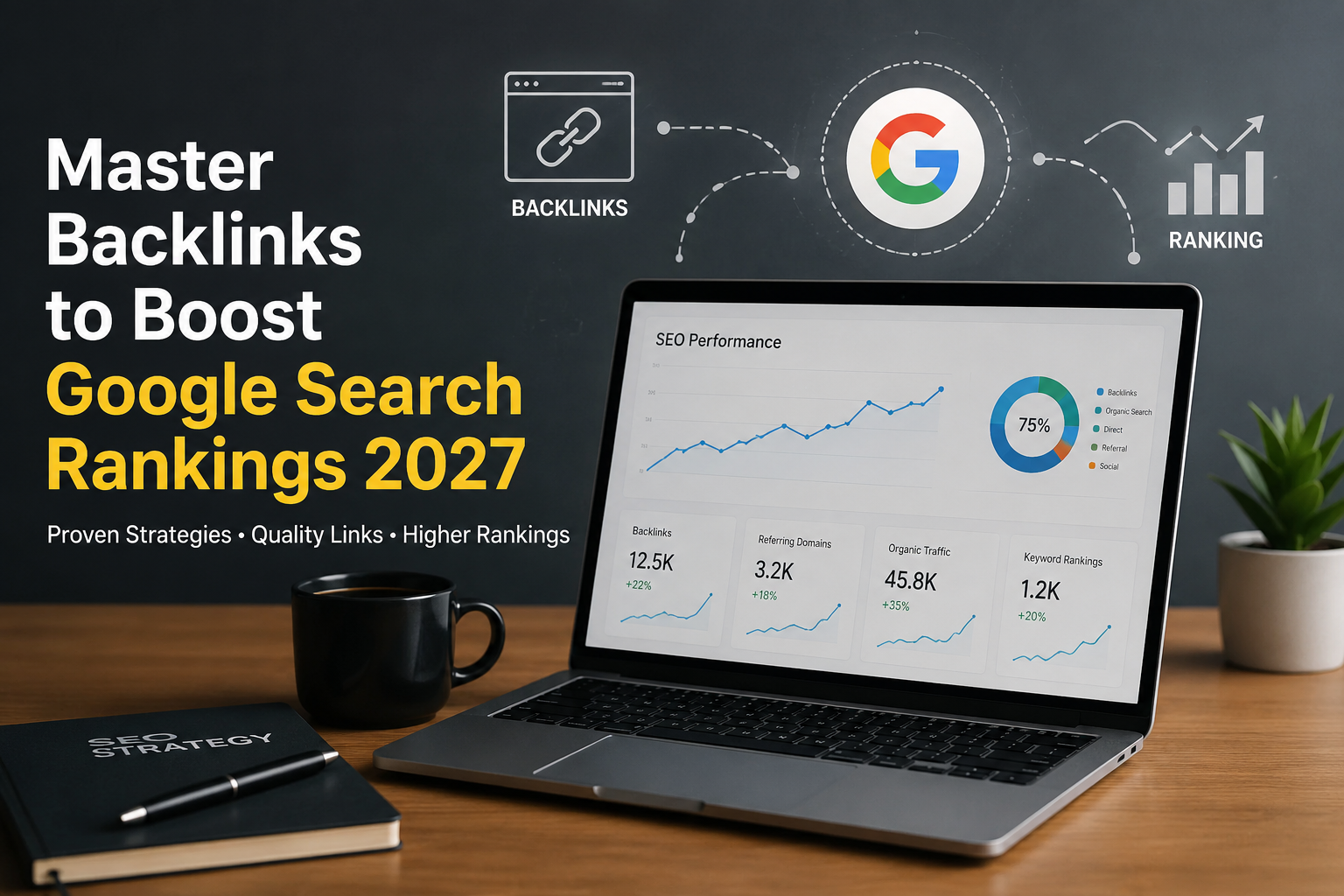
Master Backlinks to Boost Google Search Rankings 2027 ? Backlinks are one of the most important factors that influence your website’s position on Google. If you want your website to appear on the first page of search results, building high-quality backlinks should be a key part of your Search Engine Optimization strategy. While Google considers hundreds of ranking signals, backlinks remain one of the strongest indicators of trust, authority, and relevance.
However, not all backlinks are beneficial. A single high-quality backlink from a trusted website can have a greater impact than hundreds of low-quality links from spammy websites. That’s why modern Search Engine Optimization focuses on earning natural, relevant, and authoritative backlinks instead of buying or manipulating them.
In this comprehensive guide, you’ll learn everything about backlinks, why they matter, different types of backlinks, proven link-building strategies, common mistakes to avoid, and best practices to improve your Google rankings.
What Are Backlinks?
Backlinks, also known as inbound links or incoming links, are links from one website to another. When another website links to your page, Google views it as a recommendation or vote of confidence.
For example:
- Website A publishes an article and links to your blog.
- Google notices that trusted websites are referring visitors to your content.
- As a result, Google considers your website more trustworthy and may improve its rankings.
Think of backlinks as online recommendations. The more respected websites that recommend your content, the more credibility your website gains.
Why Are Backlinks Important for Google Rankings?
Google’s ranking algorithm evaluates backlinks to determine the quality and authority of websites.
Here are the main reasons backlinks matter:
1. Improve Search Engine Rankings
High-quality backlinks signal to Google that your content is valuable and trustworthy. Pages with strong backlink profiles generally rank higher than similar pages with fewer quality links.
2. Increase Website Authority
Authoritative websites passing links to your pages improve your domain authority and page authority, making it easier for future content to rank.
3. Drive Referral Traffic
Visitors can discover your website directly through backlinks placed on blogs, news websites, industry publications, and business directories.
This referral traffic is often highly targeted because users are already interested in your niche.
4. Faster Indexing
Search engine bots discover new pages by following links across the internet. Strong backlinks help Google crawl and index your website more efficiently.
5. Build Brand Trust
Being mentioned on respected websites makes your business appear more credible to both users and search engines.
Types of Backlinks
Understanding different backlink types helps you build a balanced Search Engine Optimization strategy.
(a) Editorial Backlinks
These are earned naturally when another website references your content because it provides value.
Example:
A marketing blog links to your Search Engine Optimization guide as a helpful resource.
Editorial backlinks are considered the most valuable.
(b)Guest Post Backlinks
Guest blogging allows you to publish articles on reputable websites while including a link back to your own site.
Benefits include:
- Brand exposure
- Referral traffic
- High-quality backlinks
- Industry authority
(c) Business Directory Backlinks
Listing your business in trusted online directories helps improve local SEO.
Examples include:
- Google Business Profile
- Bing Places
- Yelp
- Industry-specific directories
Avoid low-quality directories created only for link building.
(d)Social Media Links
Although most social media links are “nofollow,” they still increase visibility, drive traffic, and help content reach wider audiences.
(e)Resource Page Links
Many websites maintain resource pages that recommend useful tools, blogs, or guides.
If your content offers genuine value, website owners may add your page to their resource list.
(f)Forum and Community Links
Participating in relevant online communities can generate backlinks when done naturally.
Focus on helping users rather than dropping promotional links.
(g)Broken Link Backlinks
Website owners often have broken links pointing to pages that no longer exist.
You can contact them and recommend your relevant content as a replacement.
This strategy benefits both parties.
High-Quality vs Low-Quality Backlinks
Not every backlink helps your rankings.
High-Quality Backlinks
Characteristics include:
- Relevant niche website
- High authority domain
- Genuine editorial placement
- Natural anchor text
- Real organic traffic
- Trusted content
Low-Quality Backlinks
Usually come from:
- Spam websites
- Link farms
- Private Blog Networks (PBNs)
- Irrelevant websites
- Automated link-building tools
- Paid spam links
Google may ignore or penalize manipulative backlinks.
How Google Evaluates Backlinks
Google considers several factors before assigning value to backlinks.
1.Website Authority
Links from trusted websites carry more weight than links from unknown websites.
2.Relevance
A backlink from a website in your industry is more valuable than one from an unrelated niche.
For example:
A digital marketing blog linking to an SEO article has much more value than a cooking website linking to the same article.
3.Anchor Text
Anchor text is the clickable text of a hyperlink.
Example:
“Learn advanced Search Engine Optimization strategies”
Instead of generic phrases like “Click Here,” descriptive anchor text provides context for both users and search engines.
4.Link Placement
Links placed naturally inside the main article content are generally stronger than links in sidebars or footers.
5.Number of Referring Domains
Google values backlinks from multiple unique websites more than many links from the same domain.
Proven Strategies to Build High-Quality Backlinks
1. Create Exceptional Content
Content remains the foundation of successful link building.
Create:
- Comprehensive guides
- Original research
- Industry statistics
- Infographics
- Tutorials
- Case studies
- Checklists
The better your content, the more likely people will reference it.
2. Guest Blogging
Find reputable blogs within your industry and contribute valuable articles.
Focus on providing insights instead of promotional content.
3. Publish Original Research
Unique statistics and research attract backlinks naturally.
Examples include:
- Industry surveys
- Customer behavior reports
- Annual SEO trends
- Marketing benchmarks
People frequently cite original data.
4. Build Relationships
Networking with bloggers, journalists, influencers, and industry experts increases opportunities for earning backlinks.
Engage through:
- Industry communities
- Email outreach
5. Use HARO Alternatives
Journalists regularly seek expert opinions.
Providing useful responses can earn backlinks from news websites.
6. Broken Link Building
Steps:
- Find broken links on websites.
- Create similar content.
- Contact the website owner.
- Suggest replacing the broken link with yours.
Many website owners appreciate this help.
7. Resource Page Outreach
Search Google using:
- Search Engine Optimization resources
- Marketing resources
- Useful SEO tools
- Best marketing blogs
Reach out to website owners and recommend your helpful content.
Examples include:8. Create Linkable Assets
- Free templates
- Calculators
- SEO checklists
- Marketing calendars
- PDF guides
- Industry reports
Useful resources naturally attract backlinks.
Link Outreach Best Practices
Many backlinks come through professional outreach.
A good outreach email should:
- Be personalized
- Mention their article
- Explain why your content adds value
- Be short and respectful
- Avoid spammy language
Website owners receive many outreach emails daily.
Personalization greatly improves response rates.
Anchor Text Best Practices
Maintain a natural anchor text profile.
Examples include:
Branded
AR Infotech
Exact Match
Search Engine Optimization services
Partial Match
Learn advanced SEO services
Generic
Read more
Overusing exact-match keywords can appear manipulative.
Common Backlink Mistakes to Avoid
Buying Links
Purchasing backlinks violates Google’s guidelines and can result in penalties.
Using Private Blog Networks
PBNs may temporarily improve rankings but carry significant risks.
Excessive Link Exchanges
“Link to me and I’ll link to you” strategies should be used sparingly.
Spam Directory Submissions
Avoid submitting your website to hundreds of low-quality directories.
Automated Link Building
Automated software often creates unnatural backlinks that Google ignores or penalizes.
Irrelevant Backlinks
Always prioritize relevance over quantity.
One backlink from a respected industry website is more valuable than dozens of unrelated links.
How to Check Your Backlink Profile
Regular backlink monitoring helps identify opportunities and issues.
Popular SEO tools include:
- Google Search Console
- Ahrefs
- Semrush
- Moz
- Majestic
Monitor:
- New backlinks
- Lost backlinks
- Referring domains
- Anchor text
- Toxic links
Regular audits help maintain a healthy backlink profile.
How Long Does It Take for Backlinks to Improve Rankings?
SEO is a long-term investment.
Typically:
- Small improvements: 1–3 months
- Competitive keywords: 4–8 months
- Highly competitive industries: 6–12 months or longer
Results depend on:
- Content quality
- Website authority
- Competition
- Link quality
- Overall SEO strategy
Consistency is more important than speed.
Backlink Quality Checklist
Before pursuing a backlink, ask yourself:
- Is the website relevant to my niche?
- Does the website have genuine traffic?
- Is the content high quality?
- Is the backlink naturally placed?
- Would users actually click this link?
- Is the website trustworthy?
- Does the page provide value?
If the answer is “yes” to most questions, it’s likely a worthwhile backlink.
Future of Backlinks in SEO
As Google’s algorithms become more advanced with AI and machine learning, backlinks will continue to play a vital role—but quality will matter even more. Search engines are increasingly capable of identifying manipulative link schemes and rewarding websites that earn links naturally through valuable content and genuine authority.
Future-focused SEO strategies should prioritize:
- Building topical authority with in-depth content.
- Earning mentions from trusted industry publications.
- Creating shareable assets like research, tools, and guides.
- Strengthening brand reputation across the web.
- Combining backlink building with excellent user experience, technical SEO, and helpful content.
A balanced approach will ensure sustainable rankings in the years ahead.
Conclusion
Backlinks remain one of the strongest ranking factors in Google Search. However, success today isn’t about collecting as many links as possible—it’s about earning high-quality, relevant, and trustworthy backlinks that genuinely support your content.
Focus on creating valuable resources, publishing original insights, building relationships within your industry, and using ethical link-building strategies. Avoid shortcuts such as buying links, using spam networks, or relying on automated tools, as these can harm your website’s reputation and rankings.
When combined with strong on-page SEO, technical optimization, and a consistent content strategy, quality backlinks can significantly improve your website’s visibility, increase organic traffic, and establish your brand as a trusted authority in your niche. Patience and consistency are the keys to long-term SEO success.