Introduction
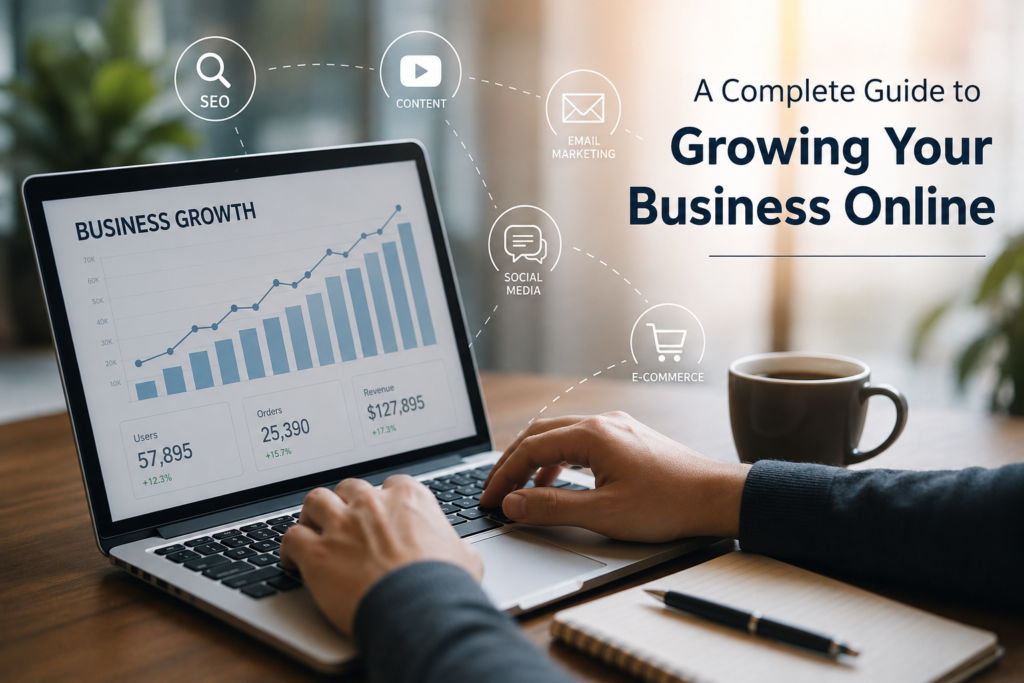
A Complete Guide to Growing Your Business Online? Online marketing has become one of the most powerful ways for businesses to reach customers, increase sales, and build strong brand awareness. As millions of people spend time on search engines, social media platforms, websites, and mobile apps every day, businesses can no longer rely only on traditional advertising methods like newspapers, television, or radio. Instead, they need a strong online presence to connect with their target audience.
Whether you are a small business owner, startup founder, freelancer, student, or marketing professional, understanding online marketing can help you achieve your goals. From promoting products and services to generating qualified leads and increasing website traffic, online marketing offers measurable and cost-effective solutions for businesses of all sizes.
In this guide, we’ll explore what online marketing is, its importance, types, benefits, strategies, tools, and best practices for success.
What is Online Marketing?
Online marketing, also known as internet marketing or digital marketing, is the process of promoting products, services, or brands using the internet and digital channels.
It involves reaching customers through various online platforms such as:
- Search Engines
- Sociel Media
- Websites
- Online Advertising
- Mobile Applications
- Video Platforms
- Content Marketing
The primary objective of online marketing is to attract potential customers, build trust, increase conversions, and grow business revenue.
Why is Online Marketing Important?
Modern consumers search online before making purchasing decisions. Businesses that fail to establish an online presence risk losing customers to competitors.
Benefits of Online Marketing
- Reach a global audience
- Cost-effective advertising
- Generate high-quality leads
- Build brand awareness
- Improve customer engagement
- Increase website traffic
- Higher return on investment (ROI)
- Measure campaign performance
- Personalized customer targeting
- 24/7 business promotion
Types of Online Marketing
1. Search Engine Optimization (SEO)
SEO is the process of optimizing a website to rank higher on search engine results pages (SERP)
SEO includes:
- Keyword Research
- On-Page SEO
- Off-Page SEO
- Technical SEO
- Local SEO
- Image SEO
Benefits:
- Organic traffic
- Better search rankings
- Increased credibility
- Long-term results
2. Search Engine Marketing (SEM)
SEM involves paid advertisements on search engines.
Popular platforms include:
- Google Ads
- Microsoft Ads
Businesses bid on keywords to display ads when users search for related products or services.
Benefits:
- Instant visibility
- Targeted audience
- High conversion rates
- Flexible budget
3. Sociall Media Marketing (SMM)
Soceal medie marketing helps businesses engage with customers on popular platforms.
Popular platforms:
- Video Platforms
- X (Twitter)
- YouTube
Activities include:
- Posting content
- Running advertisements
- Influencer collaborations
- Community engagement
- Story marketing
Benefits:
- Brand awareness
- Customer interaction
- Website traffic
- Lead generation
4. Content Marketing
Content marketing focuses on creating valuable and informative content to attract customers.
Examples:
- Blog posts
- Articles
- Videos
- Infographics
- Podcasts
- Case studies
- E-books
Benefits:
- Improves SEO
- Builds trust
- Generates leads
- Educates customers
5. Email Marketing
Email marketing allows businesses to communicate directly with customers.
Common email campaigns include:
- Newsletters
- Promotional offers
- Product launches
- Welcome emails
- Abandoned cart reminders
Benefits:
- High ROI
- Personalized communication
- Customer retention
- Increased sales
6. Pay-Per-Click (PPC) Advertising
PPC advertising allows businesses to pay only when someone clicks their advertisement.
Popular PPC platforms:
- Google Ads
- Facebook Ads
- Instagram Ads
- LinkedIn Ads
- YouTube Ads
Benefits:
- Immediate traffic
- Flexible spending
- Measurable performance
- Advanced targeting
7. Affiliate Marketing
Affiliate marketing involves partnering with individuals or websites that promote your products for a commission.
Benefits:
- Performance-based
- Low investment
- Increased sales
- Wider audience reach
8. Influencer Marketing
Businesses collaborate with sociel mmedia influencers to promote products and services.
Benefits:
- Higher trust
- Better engagement
- Brand exposure
- Increased sales
Video marketing is one of the fastest-growing online marketing methods.
Popular video platforms include:
- YouTube
- Instagram Reels
- Facebook Videos
- Shorts
- TikTok (where available)
Video ideas:
- Tutorials
- Product reviews
- Testimonials
- Company introductions
- Educational content
Benefits:
- Better engagement
- Higher conversions
- Increased brand awareness
Essential Components of Online Marketing
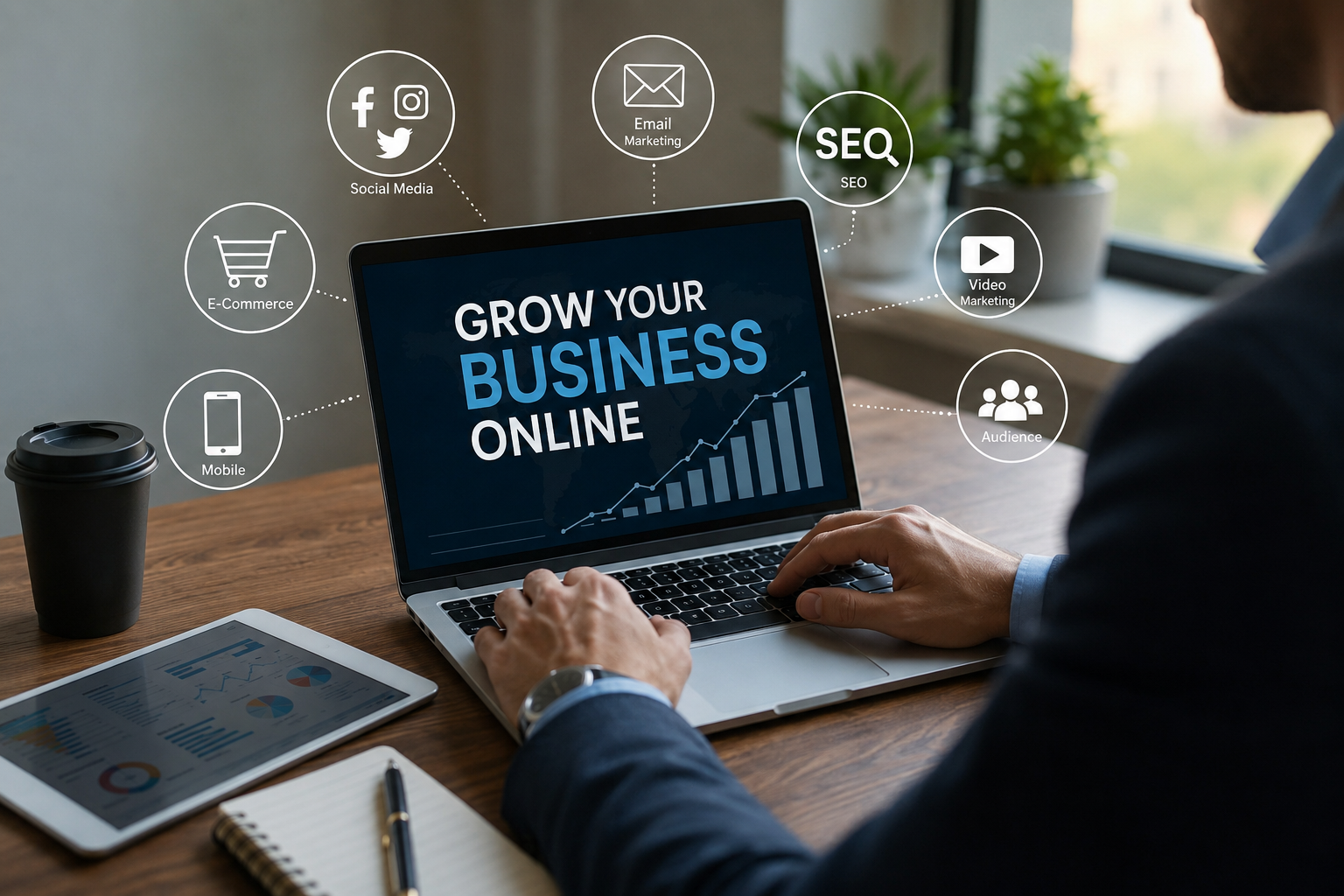
A successful online marketing strategy usually includes:
- Professional website
- SEO optimization
- High-quality content
- Social madia presence
- Email campaigns
- Paid advertising
- Analytics and reporting
- Conversion optimization
Online Marketing Strategy
1. Define Your Goals
Set clear objectives such as:
- Increase website traffic
- Generate leads
- Boost online sales
- Improve brand awareness
2. Identify Your Target Audience
Understand your audience by analyzing:
- Age
- Gender
- Interests
- Location
- Buying behavior
- Income level
3. Build a Professional Website
Your website should be:
- Mobile-friendly
- Fast-loading
- Secure (HTTPS)
- SEO-optimized
- Easy to navigate
4. Create Valuable Content
Publish useful content regularly.
Examples include:
- Blog posts
- Videos
- FAQs
- Tutorials
- Guides
5. Optimize for Search Engines
Use relevant keywords naturally in:
- Titles
- Headings
- Meta descriptions
- URLs
- Images
- Content
6. Promote on Social Media
Post consistently with:
- Images
- Videos
- Stories
- Reels
- Live sessions
7. Run Paid Campaigns
Invest in:
- Google Ads
- Meta Ads
- Display Ads
- Shopping Ads
- Video Ads
8. Analyze Performance
Monitor metrics like:
- Website traffic
- Bounce rate
- Conversion rate
- Click-through rate (CTR)
- Cost per lead
- Return on investment (ROI)
Popular Online Marketing Tools
Many tools simplify online marketing and improve efficiency.
SEO Tools
- Google Search Console
- Google Analytics
- Ahrefs
- SEMrush
- Ubersuggest
Secial Mediaa Tools
- Buffer
- Hootsuite
- Canva
Email Marketing Tools
- Mailchimp
- Brevo
- ConvertKit
Advertising Tools
- Google Ads
- Meta Ads Manager
Design Tools
- Canva
- Adobe Express
Advantages of Online Marketing
Businesses choose online marketing because it offers several advantages:
- Affordable marketing solutions
- Better audience targeting
- Global business opportunities
- Real-time campaign tracking
- Higher customer engagement
- Improved lead generation
- Better customer relationships
- Increased brand visibility
- Faster business growth
Challenges of Online Marketing
Although online marketing offers many benefits, businesses also face challenges.
Some common challenges include:
- High competition
- Changing search engine algorithms
- Rising advertising costs
- Content saturation
- Privacy regulations
- Keeping up with new trends
- Managing multiple marketing channels
Regular learning and optimization help businesses overcome these challenges.
Best Practices for Successful Online Marketing
To achieve better results:
- Focus on customer needs
- Create high-quality content
- Maintain a consistent brand voice
- Optimize your website for mobile devices
- Use SEO best practices
- Engage with your audience regularly
- Track campaign performance
- Test different marketing strategies
- Invest in continuous learning
- Adapt to changing market trends
Future of Online Marketing
The future of online marketing is being shaped by emerging technologies such as:
- Artificial Intelligence (AI)
- Voice Search Optimization
- Marketing Automation
- Personalized Customer Experiences
- Interactive Content
- Short-form Video Marketing
- Data Analytics
- Chatbots and Virtual Assistants
Businesses that embrace these innovations will be better positioned to attract customers and stay ahead of the competition.
Conclusion
Online marketing has transformed the way businesses connect with customers. From SEO and social media marketing to email campaigns, paid advertising, and content creation, it provides endless opportunities to build brand awareness, generate leads, and increase sales. With the right strategy, consistent effort, and the use of modern marketing tools, businesses of all sizes can achieve sustainable growth in the digital world.
Whether you are launching a new business, expanding an existing one, or building a personal brand, investing in online marketing is one of the smartest decisions you can make. By understanding your audience, creating valuable content, optimizing your online presence, and continuously measuring results, you can develop successful marketing campaigns that drive long-term success.