Introduction
Best Google AI Mode Guide: Everything You Need to Know 2027 ? Google AI Mode is transforming how people search online. Instead of showing only a list of websites, Google now provides AI-generated answers, personalized recommendations, and conversational search experiences. This change is reshaping Search Engine Optimization (SEO), digital marketing, and the way businesses create content.
If you’re a business owner, marketer, blogger, or SEO professional, understanding Google AI Mode is essential to stay visible in search results and attract organic traffic.
In this complete guide, you’ll learn what Google AI Mode is, how it works, its benefits, its impact on SEO, and the best strategies to optimize your content for AI-powered search.
What Is Google AI Mode?
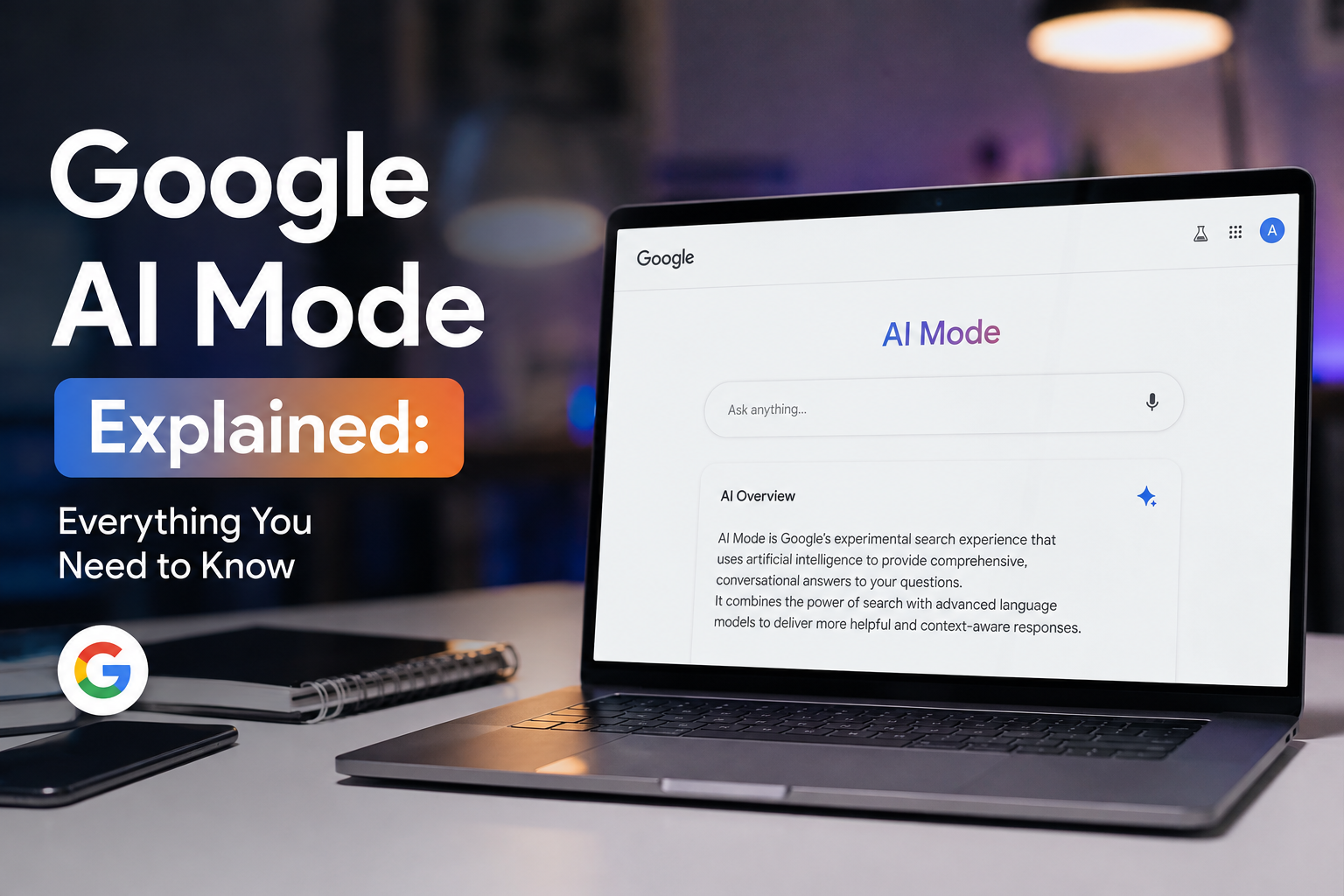
Google AI Mode is Google’s advanced AI-powered search experience that combines traditional search results with artificial intelligence. Instead of only displaying links, AI Mode understands user intent, analyzes information from multiple trusted sources, and generates detailed answers directly on the search results page.
Unlike traditional keyword-based search, AI Mode focuses on:
- Understanding natural language
- Answering complex questions
- Providing summarized information
- Offering follow-up conversations
- Delivering personalized recommendations
This creates a faster and more intuitive search experience for users.
How Google AI Mode Works
Google AI Mode uses advanced Large Language Models (LLMs), machine learning, Google’s Knowledge Graph, and real-time web indexing to understand user queries.
The process includes:
1. Understanding User Intent
Instead of matching keywords, Google understands the meaning behind a query.
Example:
Traditional Search:
“Best laptop”
AI Mode:
“I need a laptop for video editing under ₹80,000.”
The AI recognizes:
- Budget
- Purpose
- Performance requirements
- User intent
2. Collecting Reliable Information
Google scans thousands of trusted websites to gather relevant information.
It considers:
- Authority
- Accuracy
- Freshness
- User experience
- Expertise
3. AI Generates a Response
The AI summarizes the information into a readable answer.
Instead of opening five websites, users receive a complete explanation immediately.
4. Follow-Up Questions
Users can continue the conversation.
Example:
“What is the best laptop?”
The best laptop depends on your budget, needs, and intended use.
“Which one has the longest battery life?”
Laptops like the MacBook Air and some premium ultrabooks offer excellent battery life.
“Can I use it for gaming?”
Yes, if it has a dedicated graphics card and a powerful processor.
This conversational search experience resembles chatting with an AI assistant.
Key Features of Google AI Mode
Google summarizes information instead of only displaying links.
Benefits:
- Faster information
- Better understanding
- Reduced research time
2. Conversational Search
Users can ask follow-up questions naturally.
Example:
“What is SEO?”
SEO (Search Engine Optimization) is the process of improving a website’s visibility in search engines like Google to attract more organic traffic.
“How long does SEO take?”
SEO typically takes 3–6 months to show noticeable results, depending on competition and website quality.
“How much does SEO cost?”
SEO costs vary widely, ranging from ₹10,000 to ₹1,00,000+ per month based on the project’s size and goals.
3. Multi-Step Search
Google AI can solve complex problems involving multiple questions simultaneously.
Example:
“Plan a 3-day trip to Manali with a ₹20,000 budget.”
AI generates:
- Hotels
- Food
- Attractions
- Budget
- Transportation
4. Personalized Results
Google considers:
- Search history
- Location
- Preferences
- Device
- Context
to deliver more relevant responses.
5. Visual Search Integration
Users can search using:
- Images
- Voice
- Camera
- Text
AI combines all inputs for better answers.
Benefits of Google AI Mode
1.Faster Search Experience
Users receive direct answers without visiting multiple websites.
2.Better User Experience
AI provides:
- Organized information
- Easy-to-read summaries
- Relevant suggestions
3.Improved Productivity
Professionals can:
- Research faster
- Compare products
- Learn new topics
- Solve technical problems quickly
4.Smarter Shopping
AI compares:
- Prices
- Reviews
- Features
- Availability
before suggesting products.
5.Enhanced Local Search
Businesses benefit from AI recommendations based on:
- Reviews
- Reputation
- Distance
- Popularity
How Google AI Mode Changes SEO
AI Mode is significantly changing traditional SEO strategies.
Instead of optimizing only for keywords, websites must now focus on providing complete, trustworthy, and user-focused content.
Major SEO changes include:
1. Search Intent Matters More
Google prioritizes content that fully answers the user’s question.
Instead of writing for keywords, write for people.
2. Topical Authority
Publishing multiple articles on related topics helps establish expertise.
Example:
Instead of one SEO article, create content about:
- On-page SEO
- Technical SEO
- Local SEO
- Link Building
- AI SEO
- GEO
- Schema Markup
Google is more likely to trust websites with comprehensive topical coverage.
3. EEAT Is More Important
Google values:
- Experience
- Expertise
- Authoritativeness
- Trustworthiness
Include:
- Author information
- Real-world examples
- Case studies
- Updated content
- Credible sources
4. Content Quality Over Quantity
A 700-word article that solves a problem completely can outperform a longer article filled with unnecessary content.
Focus on:
- Accuracy
- Clarity
- Readability
- Practical value
5. Entity-Based SEO
Google understands relationships between people, brands, places, and concepts.
Include relevant entities naturally in your content instead of repeating the same keyword excessively.
How to Optimize for Google AI Mode
(a) Create Helpful Content
Write articles that answer real user questions.
Avoid:
- Keyword stuffing
- Thin content
- Duplicate pages
(b) Use Question-Based Headings
Examples:
- What is SEO?
- How does Google AI Mode work?
- Why is AI Search important?
- What are the benefits?
This structure helps AI understand your content.
(c)Add FAQ Sections
Frequently Asked Questions improve the chances of your content being used in AI-generated responses.
Example:
Q: Is Google AI Mode replacing SEO?
No. SEO remains essential, but strategies now emphasize quality, authority, and user intent rather than keyword repetition.
(d) Use Structured Data (Schema Markup)
Implement schema such as:
- FAQ Schema
- Article Schema
- Organization Schema
- Breadcrumb Schema
- Product Schema
Structured data helps search engines better interpret your pages.
(e)Improve Content Readability
Use:
- Short paragraphs
- Bullet points
- Tables
- Images
- Infographics
- Clear headings
Readable content is easier for both users and AI systems to process.
(f)Keep Content Updated
Google prefers fresh information.
Regularly update:
- Statistics
- Examples
- Screenshots
- Best practices
Google AI Mode vs Traditional Search
| Traditional Search | Google AI Mode |
| Keyword-focused | Intent-focused |
| List of links | AI-generated summaries plus links |
| Manual research | Instant synthesized answers |
| Limited interaction | Conversational follow-up |
| Separate searches | Multi-step assistance |
Common Mistakes to Avoid
Many websites may lose visibility because of outdated SEO practices.
Avoid:
- Keyword stuffing
- AI-generated content without human review
- Duplicate articles
- Clickbait headlines
- Low-quality backlinks
- Thin pages with little value
- Ignoring page speed and mobile usability
Instead, prioritize originality, accuracy, and user satisfaction.
The Future of Google AI Mode
Google AI Mode is expected to evolve further with features such as:
- More personalized search experiences
- Deeper integration with voice and visual search
- Better multilingual support
- Smarter local recommendations
- Enhanced shopping assistance
- More conversational interactions
- Improved real-time information synthesis
As AI becomes central to search, businesses that invest in high-quality, authoritative content will be better positioned to earn visibility.
Best Practices Checklist
Use this checklist to prepare your content for AI-powered search:
- Research user intent before writing
- Cover topics comprehensively
- Build topical authority through related articles
- Demonstrate expertise and trustworthiness
- Use clear headings and subheadings
- Add FAQ sections
- Implement structured data
- Optimize page speed and mobile experience
- Refresh content regularly
- Include original insights, examples, and visuals
Conclusion
Google AI Mode represents a major shift in how people discover information online. Search is becoming more conversational, context-aware, and focused on delivering direct answers rather than simply listing webpages.
For marketers, businesses, and publishers, this means success will depend less on traditional keyword optimization alone and more on creating trustworthy, in-depth, and user-centric content. By understanding user intent, building topical authority, following EEAT principles, and keeping content accurate and up to date, you can improve your chances of appearing in AI-powered search experiences.
Rather than viewing Google AI Mode as a challenge, treat it as an opportunity to provide better information and a superior user experience. Websites that consistently publish valuable, well-structured content will be well positioned to thrive as AI continues to shape the future of search.