Introduction
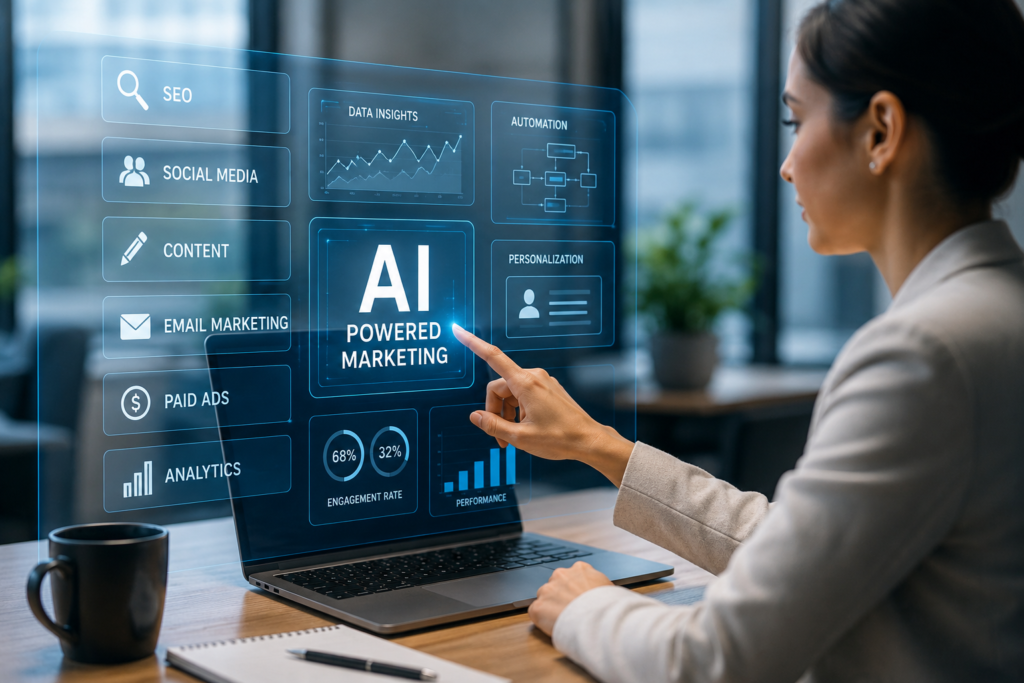
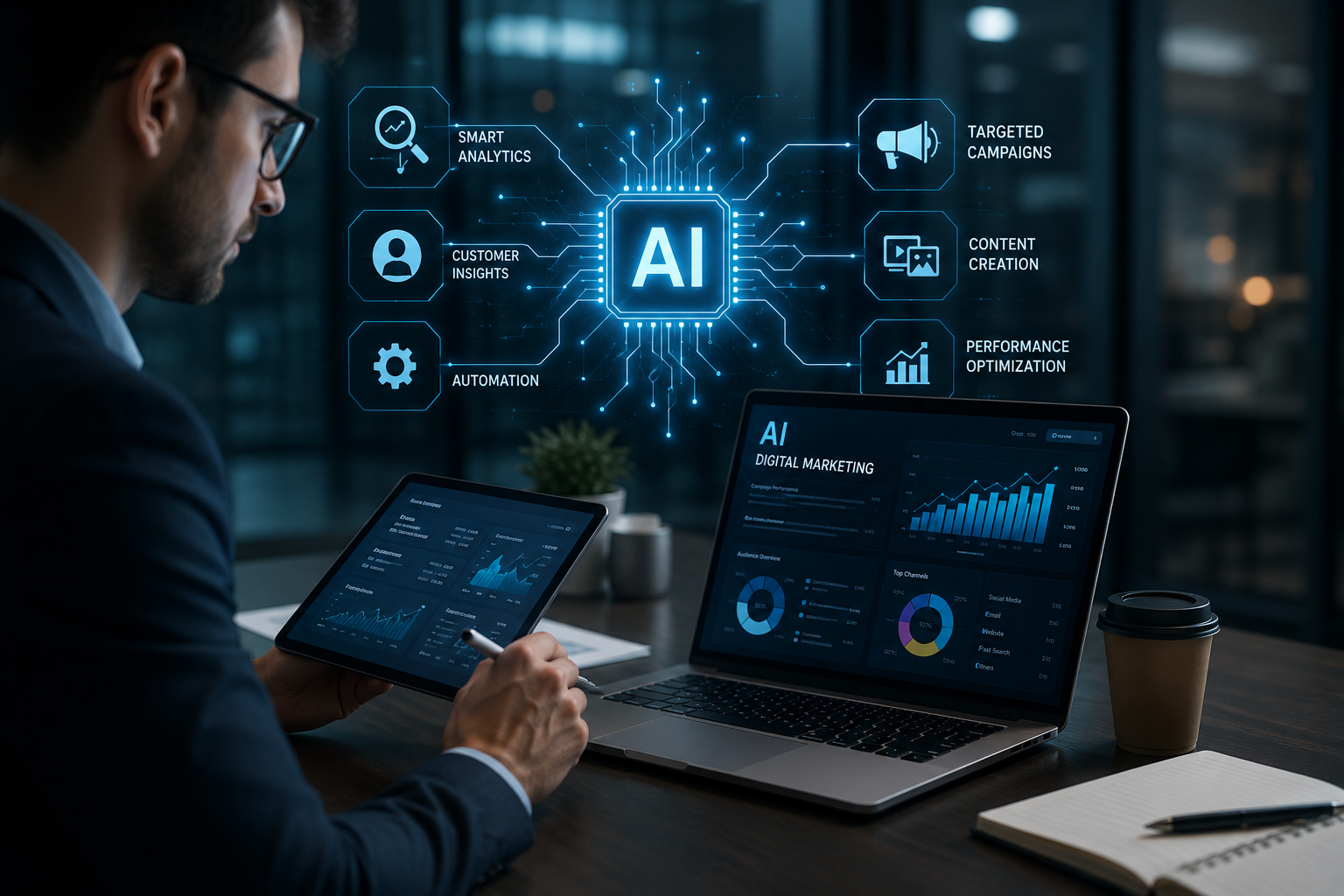
AI Is Changing Digital Marketing in 2026 has become one of the biggest driving forces behind digital marketing in 2026. What once seemed like futuristic technology is now a daily part of how businesses connect with customers, create content, analyze data, and increase sales. Fromchatbots and personalized email campaigns to predictive analytics and automated advertising, AI is transforming every aspect of digital marketing.
Businesses of all sizes—from startups to multinational companies—are using AI to improve customer experiences, reduce manual work, and achieve better marketing results. Marketers no longer rely only on guesswork; AI helps them make data-driven decisions, understand customer behavior, and deliver the right message to the right audience at the perfect time.
Whether you’re a digital marketer, business owner, student, or freelancer, understanding how AI is changing digital marketing in 2026 is essential to staying competitive.
What Is AI in Digital Marketing?
Artificial Intelligence in digital marketing refers to the use of machine learning, natural language processing (NLP), predictive analytics, and automation to improve marketing strategies and customer engagement.
AI can:
- Analyze large amounts of customer data
- Create content
- Optimize advertising campaigns
- Personalize user experiences
- Predict customer behavior
- Automate repetitive tasks
Instead of replacing marketers, AI acts as a powerful assistant that helps them work faster and smarter.
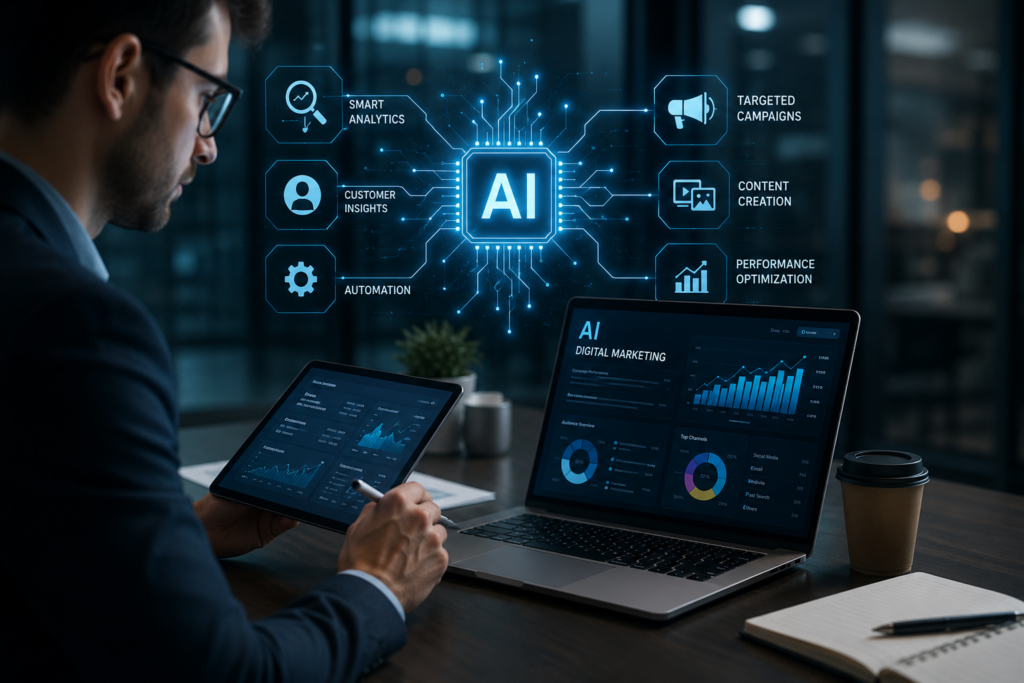
Why AI Is Becoming Essential in 2026 ?
The digital landscape is becoming more competitive every year. Consumers expect personalized experiences, instant responses, and highly relevant content.
AI helps businesses:
- Save time
- Reduce marketing costs
- Improve customer satisfaction
- Increase ROI
- Generate better leads
- Make faster decisions
Companies that effectively use AI gain a significant competitive advantage.
1. AI-Powered Content Creation
Content remains one of the most important aspects of digital marketing, but AI has transformed how it’s created.
AI tools can now help marketers:
- Write blog posts
- Generate social media captions
- Create ad copy
- Write email campaigns
- Generate product descriptions
- Suggest SEO improvements
While human creativity is still essential, AI significantly speeds up the content creation process.
2. Smarter SEO Strategies
Search Engine Optimization has evolved significantly in 2026.
AI helps marketers:
- Discover high-ranking keywords
- Analyze competitors
- Suggest content improvements
- Optimize headings
- Improve internal linking
- Identify technical SEO issues
AI also helps create content that better matches user search intent, improving rankings on search engines.
3. Hyper-Personalized Marketing
Customers no longer respond well to generic advertisements.
AI enables businesses to personalize:
- Product recommendations
- Website content
- Email campaigns
- Shopping experiences
- Landing pages
- Promotional offers
For example, two users visiting the same website may see different content based on their interests and browsing history.
4. AI Chatbots Provide Instant Customer Support
Modern AI chatbots have become far more advanced.
They can:
- Answer customer questions
- Recommend products
- Schedule appointments
- Resolve common issues
- Collect customer information
- Provide 24/7 support
This improves customer satisfaction while reducing support costs.
5. Predictive Analytics
One of AI’s biggest strengths is predicting future customer behavior.
AI analyzes:
- Purchase history
- Website activity
- Customer interests
- Search behavior
- Demographic information
This helps marketers predict:
- Which customers are likely to buy
- Which products may become popular
- When customers may leave
- Which campaigns will perform best
Predictive marketing reduces risk and improves decision-making.
6. AI Improves Google Ads Performance
Google Ads has become increasingly AI-driven.
AI automatically optimizes:
- Bidding strategies
- Audience targeting
- Budget allocation
- Ad placements
- Conversion optimization
Smart bidding helps businesses maximize results while minimizing advertising costs.
7. Social Media Marketing Is Smarter
AI helps marketers manage social media more efficiently.
It can:
- Suggest posting times
- Generate captions
- Recommend hashtags
- Analyze audience engagement
- Identify trending topics
- Schedule content
Brands can create more engaging social media campaigns with less manual effort.
8. Email Marketing Automation
Email marketing remains one of the highest ROI marketing channels.
AI improves email marketing by:
- Personalizing subject lines
- Segmenting audiences
- Predicting open rates
- Optimizing send times
- Recommending products
- Automating follow-ups
This results in higher engagement and more conversions.
9. Voice Search Optimization
Voice searches continue to grow through smartphones and smart assistants.
AI helps businesses optimize content for conversational searches such as:
- “Where is the best digital marketing institute near me?”
- “How do I improve my website ranking?”
Creating natural, question-based content increases visibility in voice search results.
10. AI Video Creation and Editing
Video marketing has become easier with AI.
AI tools assist in:
- Editing videos
- Generating subtitles
- Removing background noise
- Creating animations
- Producing short-form videos
- Repurposing long videos into social media clips
Businesses can produce high-quality video content faster than ever.
11. Better Customer Insights
AI analyzes customer behavior across multiple platforms.
It helps businesses understand:
- What customers like
- Which products perform best
- Which pages convert the most
- Where visitors leave the website
- Customer buying patterns
These insights allow marketers to improve campaigns continuously.
12. AI Enhances E-commerce Marketing
Online stores benefit greatly from AI.
Features include:
- Personalized product recommendations
- Dynamic pricing
- Cart abandonment recovery
- Smart product search
- Inventory forecasting
- Customer segmentation
These improvements increase sales and customer satisfaction.
13. Marketing Automation
AI automates repetitive marketing tasks.
Examples include:
- Posting on social media
- Sending emails
- Lead nurturing
- CRM updates
- Customer segmentation
- Campaign reporting
Automation allows marketers to focus on strategy and creativity.
Traditional advertising often reached broad audiences.
AI identifies users most likely to convert by analyzing:
- Online behavior
- Purchase history
- Interests
- Device usage
- Location
- Search intent
This increases conversion rates while reducing wasted ad spend.
15. AI Improves Customer Journey Mapping
AI tracks every stage of the customer journey.
Businesses can understand:
- How customers discover their brand
- Which pages they visit
- Where they abandon the purchase
- Which content influences buying decisions
This helps marketers optimize every touchpoint.
Benefits of AI in Digital Marketing
AI offers numerous advantages, including:
- Faster content creation
- Improved personalization
- Better customer experiences
- Increased productivity
- Lower marketing costs
- Smarter decision-making
- Higher conversion rates
- Better ROI
- More accurate analytics
- Enhanced customer engagement
Challenges of Using AI
Despite its benefits, AI also presents challenges.
These include:
- Over-reliance on automation
- Data privacy concerns
- Learning new tools
- AI-generated inaccuracies
- Maintaining brand authenticity
- Ethical considerations
Human oversight remains essential to ensure quality, accuracy, and trust.
Future of AI in Digital Marketing
AI is expected to become even more integrated into marketing in the coming years.
Future trends may include:
- More advanced predictive analytics
- Fully personalized websites
- AI-powered shopping assistants
- Improved visual search
- Smarter voice assistants
- Enhanced customer experience automation
- AI-generated interactive content
- Better marketing analytics
Businesses that adapt early will be better positioned to succeed.
Best Practices for Using AI in Digital Marketing
To get the most from AI:
- Use AI to support, not replace, human creativity.
- Review AI-generated content for accuracy and brand voice.
- Focus on creating valuable, original content.
- Protect customer data and comply with privacy regulations.
- Continuously monitor campaign performance.
- Stay updated with new AI tools and marketing trends.
- Combine AI insights with human expertise for better decisions.
Conclusion
Artificial Intelligence is reshaping digital marketing in 2026 by making campaigns more intelligent, personalized, and efficient. From SEO and content creation to advertising, customer support, email marketing, and analytics, AI helps businesses reach the right audience with the right message at the right time. However, the most successful marketers use AI as a powerful assistant rather than a complete replacement for human creativity and strategic thinking.
By embracing AI responsibly and staying focused on user needs, businesses can improve marketing performance, strengthen customer relationships, and remain competitive in an increasingly digital world. In 2026, mastering AI is no longer optional—it’s a key skill for anyone who wants to succeed in digital marketing.