Introduction
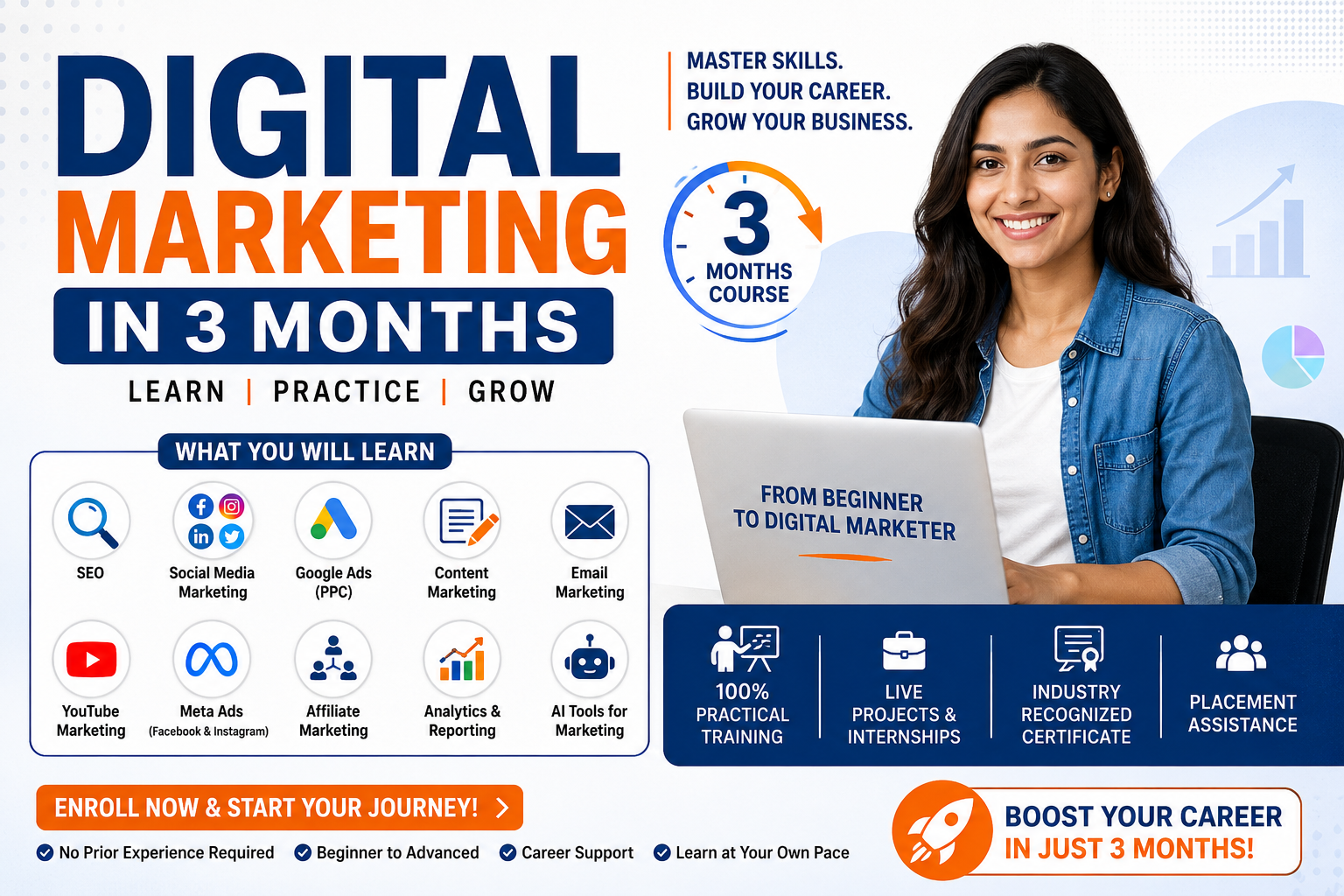
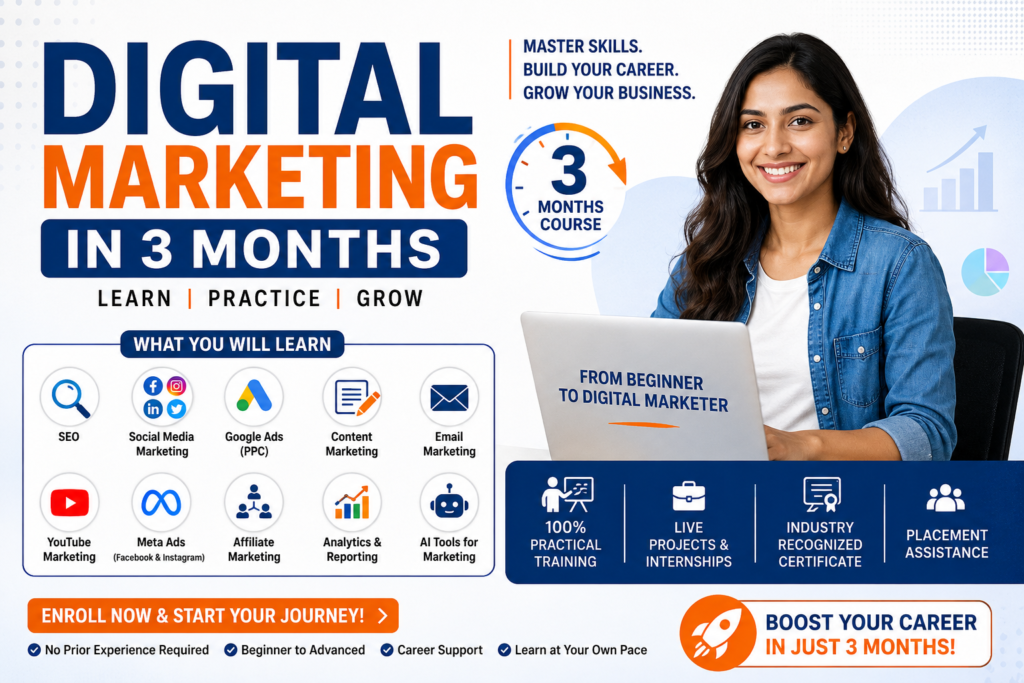
Digital Marketing in 3 Months course The answer is yes—but it depends on how you learn, how much time you invest, and whether you focus on practical experience. Digital marketing is one of the fastest-growing career fields, offering opportunities for students, job seekers, freelancers, business owners, and professionals looking to switch careers.
With the right learning plan, consistent practice, and hands-on projects, you can understand the fundamentals of digital marketing within three months. While becoming an expert takes longer, three months is enough to build a strong foundation, create a portfolio, and start applying for internships, freelance projects, or entry-level jobs.
In this guide, you’ll learn what digital marketing includes, what skills you can master in three months, a step-by-step learning roadmap, and tips to accelerate your growth.
What Is digital marketing
Digital marketing is the process of promoting products or services through online channels such as search engines, social media platforms, websites, email, and paid advertising. Unlike traditional marketing, digital marketing allows businesses to reach targeted audiences, measure performance in real time, and improve campaigns based on data.
The main areas of digital marketing include:
- Search Engine Optimization
- Search Engine Marketing (Google Ads)
- Social Media Marketing (SMM)
- Content Marketing
- Email Marketing
- Affiliate Marketing
- Video Marketing
- Analytics and Reporting
- AI-Powered Marketing
Learning these fundamentals helps you understand how businesses attract visitors, generate leads, and increase sales online.
Is Digital Marketing in 3 Months course Enough?
Yes, three months is enough to learn the basics if you stay consistent.
A beginner who studies 2–4 hours daily can gain practical knowledge of:
- SEO basics
- Social media marketing
- Google Ads fundamentals
- Content creation
- Keyword research
- Website optimization
- Analytics
- AI tools for marketing
However, becoming an advanced digital marketer usually requires six months to a year of practical experience working on real websites and campaigns.
Month 1: Build a Strong Foundation
The first month should focus on understanding the basics.
Learn Digital Marketing Fundamentals
Understand:
- How search engines work
- Customer journey
- Marketing funnel
- Brand awareness
- Lead generation
- Conversion optimization
Learn Website Basics
Every marketer should know:
- Domains
- Hosting
- WordPress
- Landing pages
- Website speed
- Mobile responsiveness
Knowing how websites work makes SEO and advertising much easier.
Learn Basic SEO
Search Engine Optimization
is one of the most valuable digital marketing skills.
Focus on:
- Keyword research
- On-page SEO
- Meta titles
- Meta descriptions
- Heading tags
- Internal linking
- Image optimization
- URL optimization
Use tools like:
- Google Search Console
- Google Keyword Planner
- Google Trends
Month 2: Learn Marketing Channels
During the second month, begin learning different traffic sources.
Social Media Marketing
Understand how businesses grow on:
- YouTube
- X (Twitter)
Learn:
- Content planning
- Reels strategy
- Hashtags
- Audience engagement
- Scheduling posts
Google Ads
Paid advertising helps businesses generate quick traffic.
Learn:
- Search campaigns
- Display ads
- Video ads
- Keyword targeting
- Bidding strategies
- Ad copywriting
- Landing page optimization
Content Marketing
Content is one of the most important parts of digital marketing.
Learn how to create:
- Blog posts
- Articles
- Landing page content
- Product descriptions
- Case studies
- Email newsletters
Always write content that solves users’ problems and answers their questions.
Email Marketing
Understand:
- Email campaigns
- Automation
- Welcome emails
- Promotional emails
- Lead nurturing
Email marketing remains one of the highest ROI marketing channels.
Month 3: Practice with Real Projects
Knowledge without practice has limited value.
In the third month:
Create Your Own Website
Build a simple website or blog.
Practice:
- Publishing articles
- Optimizing pages
- Adding images
- Improving speed
- Writing SEO-friendly content
Practice SEO
Try ranking your own articles.
Work on:
- Keyword optimization
- Internal linking
- Technical Search Engine Optimization
- Content updates
Track performance using Google Search Console.
Run Sample Ad Campaigns
Even a small advertising budget helps you understand:
- Audience targeting
- Ad optimization
- Conversion tracking
- ROI
Learning by doing is far more effective than only watching tutorials.
Build a Portfolio
A portfolio helps demonstrate your skills to employers and clients.
Include:
- SEO projects
- Blog articles
- Social media posts
- Website screenshots
- Keyword research reports
- Google Ads campaign examples
- Analytics reports
A strong portfolio often matters more than certificates.
Essential Skills You Should Learn
By the end of three months, aim to understand:
- Search Engine Optimization
- Google Ads
- Meta Ads
- Social Media Marketing
- Content Marketing
- Email Marketing
- Google Analytics
- Google Search Console
- Canva
- AI Tools
- WordPress
- Basic HTML
- Basic CSS
Best AI Tools for Learning Faster
Artificial Intelligence can significantly speed up your learning process.
Popular AI tools include:
- ChatGPT
- Gemini
- Claude
- Perplexity AI
- Canva AI
- Notion AI
These tools can help you:
- Generate content ideas
- Write blog outlines
- Create ad copy
- Research keywords
- Improve Search Engine Optimization
- Analyze competitors
- Generate social media captions
Remember, AI should support your work—not replace your understanding.
Common Mistakes Beginners Make
Avoid these common errors:
- Learning without practicing
- Ignoring SEO
- Depending only on AI
- Not creating a personal website
- Avoiding analytics
- Copying competitors
- Chasing every new trend
- Giving up too early
Consistency is the key to success.
How Many Hours Should You Study?
A practical schedule could look like this:
- 1–2 hours/day: Learn theory through courses, articles, and videos.
- 1–2 hours/day: Practice on your own website or demo projects.
- 30 minutes/day: Read industry news and updates.
Studying regularly is more effective than long, irregular sessions.
Career Opportunities After Three Months
Once you’ve built foundational skills and completed practical projects, you can apply for:
- Digital Marketing Intern
- SEO Executive
- Social Media Executive
- Content Writer
- PPC Assistant
- Email Marketing Executive
- WordPress Executive
- Freelance Digital Marketer
These roles provide valuable experience that helps you grow into more specialized positions over time.
Tips to Learn Faster
To maximize your progress:
- Follow a structured learning roadmap.
- Practice every concept on a real website.
- Read blogs from trusted marketing experts.
- Watch updated tutorials.
- Join digital marketing communities.
- Build a portfolio alongside your learning.
- Learn basic data analysis with Google Analytics.
- Stay updated with AI and search engine changes.
Small daily improvements add up over time.
Conclusion
So, can you learn digital marketing in 3 months course ? Absolutely. Three months is enough to build a solid foundation in SEO, social media marketing, Google Ads, content marketing, email marketing, analytics, and AI-powered marketing tools—provided you study consistently and practice what you learn.
The most successful beginners don’t just complete courses; they create websites, publish content, run campaigns, and build portfolios that showcase real skills. If you dedicate a few hours each day, stay curious, and keep learning from hands-on experience, you’ll be well prepared for internships, freelance opportunities, or entry-level digital marketing roles. Remember, digital marketing is a field of continuous learning, and the habits you develop during these first three months will shape your long-term success.