Introduction
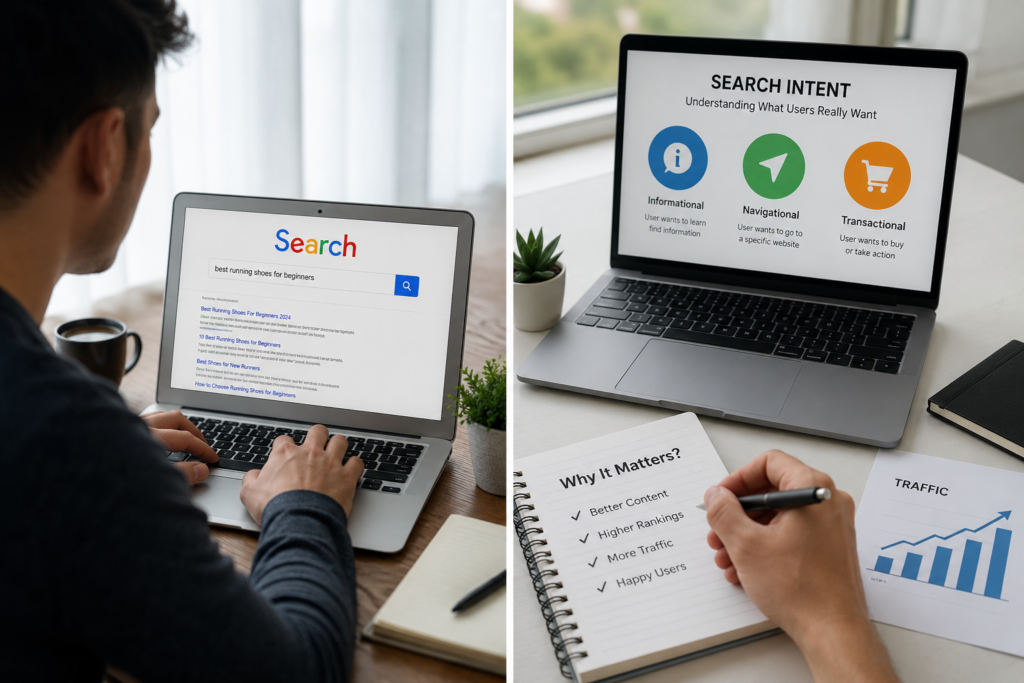
Search Intent and Why Does It Matter? why it matters for SEO, the four types of search intent, and how to optimize content that ranks higher on Google. the top of Google while others struggle to get noticed, search intent is one of the biggest reasons. Modern SEO is no longer just about using the right keywords. Search engines now focus on understanding why someone is searching.
For example, someone searching “best SEO tools” wants recommendations, while someone searching “buy Ahrefs subscription” is ready to make a purchase. Although both searches relate to SEO tools, their intent is completely different.
Google’s goal is to provide the most relevant result for every search query. If your content matches the user’s intent, it has a much better chance of ranking higher, increasing traffic, improving engagement, and generating more conversions.
In this guide, you’ll learn what search intent is, why it’s important, the four main types of search intent, and how to optimize your content to satisfy both users and search engines.
What Is Search Intent?
Search intent, also called user intents or keyword intents, refers to the reason behind a user’s search query. It explains what the user wants to accomplish when typing a keyword into a search engine.
A user may want to:
- Learn something
- Find a specific website
- Compare products
- Buy a product
- Hire a service
- Watch a tutorial
- Read reviews
Google analyzes search behavior, language, previous searches, and content quality to determine which pages best satisfy that intent.
Simply targeting keywords is no longer enough. Your content must answer the user’s actual question or solve their problem.
Why Does Search Intent Matter?
Search intent is one of Google’s most important ranking factors because it directly affects user satisfaction.
When your content matches what users expect, it can provide several SEO benefits:
Higher Google Rankings
Google rewards pages that accurately answer search queries. Matching search intent improves your chances of appearing on the first page of search results.
More Organic Traffic
Content aligned with user intent attracts qualified visitors who are genuinely interested in your topic.
Better User Experience
Visitors stay longer, explore more pages, and engage with your website when they quickly find the information they need.
Lower Bounce Rate
If users immediately find relevant answers, they are less likely to leave your site after viewing only one page.
Higher Conversion Rates
When content aligns with commercial or transactional intent, visitors are more likely to subscribe, contact you, or make a purchase.
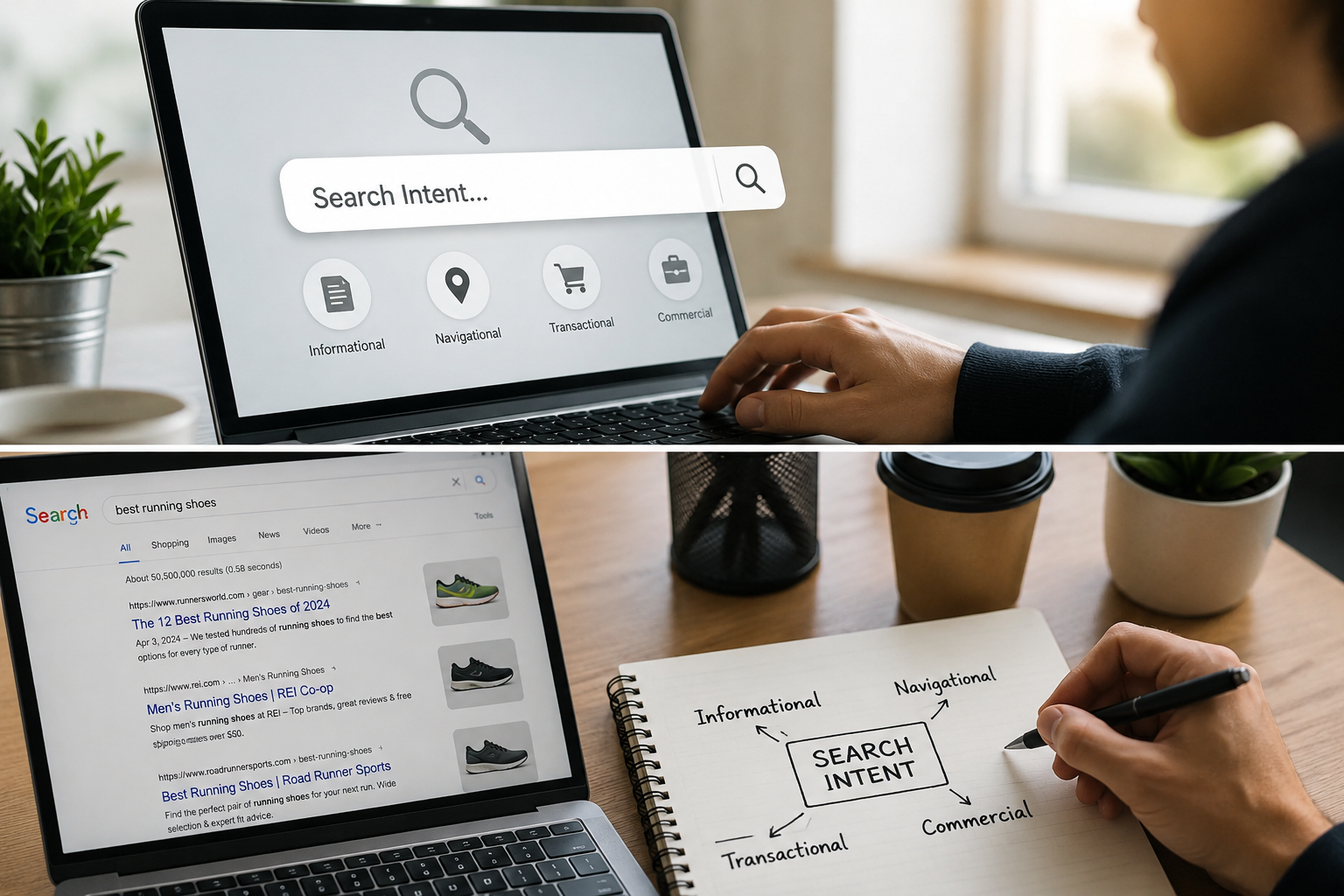
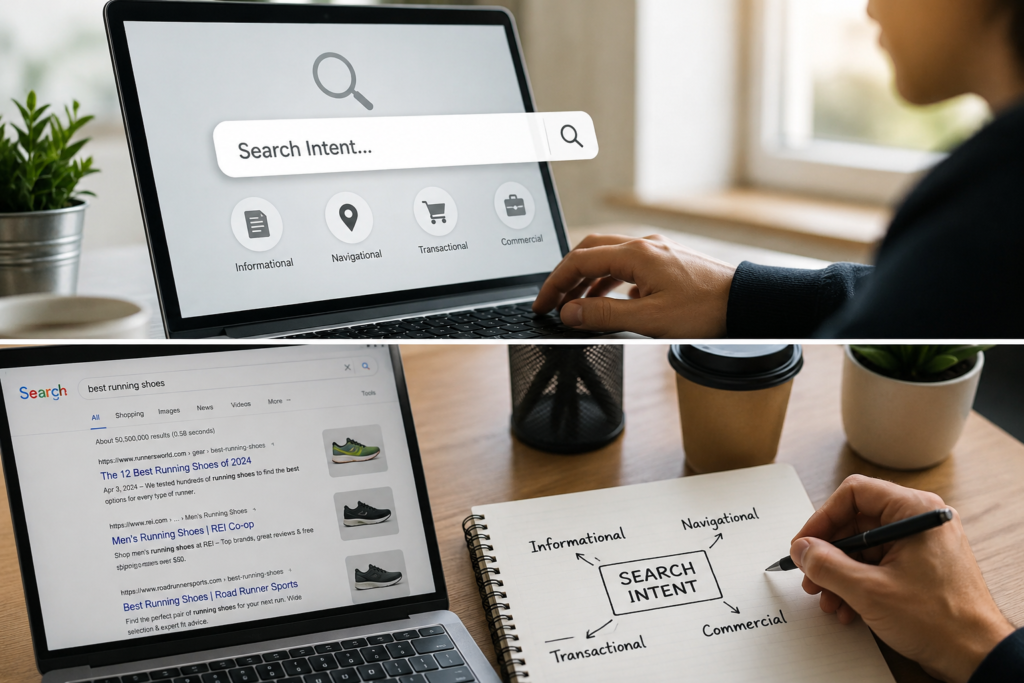
The Four Types of Search Intent?
Understanding these four categories is essential for creating content that performs well.
1. Informational Intent
Users want to learn something or find an answer to a question.
Examples:
- What is SEO?
- How does Google rank websites?
- What is search intent?
- Digital marketing basics
Best content formats:
- Blog posts
- Guides
- Tutorials
- Checklists
- Videos
- FAQs
2. Navigational Intent
Users already know the website they want to visit.
Examples:
- Facebook Login
- Gmail
- YouTube Studio
- Google Search Console
The goal is simply to reach a specific website or page.
3. Commercial Investigation Intent
Users are researching before making a purchase.
Examples:
- Best SEO tools
- Ahrefs vs Semrush
- Best web hosting
- Digital marketing course reviews
Ideal content includes:
- Product comparisons
- Reviews
- Buying guides
- Top 10 lists
- Feature comparisons
4. Transactional Intent
Users are ready to take action.
Examples:
- Buy laptop online
- Hire SEO expert
- Enroll in digital marketing course
- Download Canva Pro
Landing pages, pricing pages, product pages, and service pages work best for transactional searches.
How Google Understands Search Intent?
Google uses advanced technologies, including Artificial Intelligence, machine learning, natural language processing, and user behavior analysis, to understand what searchers really want.
Google considers:
- Search query wording
- Search history
- Location
- Device type
- Trending searches
- User engagement
- Click-through rate
- Content relevance
- Freshness of information
This is why simply repeating keywords no longer guarantees rankings. The content must fully satisfy the user’s intent.
How to Identify Search Intent?
Before writing any content, determine what users expect.
Analyze Google Search Results
Search your target keyword and study the top-ranking pages.
Ask yourself:
- Are they blog posts?
- Product pages?
- Videos?
- Comparison articles?
- Local business listings?
Google already shows which content format matches user expectations.
Look for Trigger Words
Different words often indicate different types of intent.
Informational:
- What
- How
- Why
- Guide
- Tutorial
- Tips
Commercial:
- Best
- Top
- Compare
- Review
- Alternative
Transactional:
- Buy
- Order
- Price
- Discount
- Hire
- Book
Navigational:
- Login
- Official
- Website
- Dashboard
Study Competitors
Analyze competitors that already rank on page one.
Look at:
- Content depth
- Headings
- Images
- FAQs
- Internal links
- User experience
Then create something more useful and comprehensive.
How to Optimize Content for Search Intent?
Answer the Main Question Quickly
Provide a clear answer in the first few paragraphs before going into detail.
If Google ranks list articles, don’t publish a product page.
If Google prefers tutorials, don’t write a short opinion piece.
Always match the dominant content type.
Cover Related Questions
Include supporting information users are likely to need.
For example, if your topic is Search Intent, also explain:
- Types of search intent
- Why search intent matters
- Examples
- Optimization tips
- Common mistakes
This creates comprehensive content that satisfies users.
Use Clear Headings
Organize your article using descriptive H2 and H3 headings.
This improves readability for both users and search engines.
Add FAQs
Frequently Asked Questions increase topical relevance and may improve your chances of appearing in AI-generated answers or rich results.
Optimize for Featured Snippets
Answer questions in concise paragraphs, numbered lists, or tables.
Google often selects these formats for featured snippets.
Common Search Intent Mistakes
Many websites fail because they ignore user intent.
Avoid these mistakes:
- Targeting only high-volume keywords
- Creating content that doesn’t answer the query
- Stuffing keywords unnaturally
- Publishing thin content
- Ignoring competitor analysis
- Using misleading titles
- Failing to update outdated content
Best Tools for Search Intent Research
Several tools can help you better understand user intent:
- Google Search
- Google Search Console
- Google Trends
- Google Keyword Planner
- Ahrefs
- Semrush
- Ubersuggest
- AnswerThePublic
- AlsoAsked
- ChatGPT (for brainstorming search questions)
These tools help uncover related queries, user questions, and keyword opportunities.
Future of Search Intent
As AI-powered search continues to evolve, search intent will become even more important.
Google’s AI Overviews, conversational search, voice assistants, and personalized search experiences all focus on understanding user needs rather than simply matching keywords.
Websites that consistently create helpful, experience-based, and intent-focused content will be better positioned to attract organic traffic and remain competitive in the years ahead.
Conclusion
Search intent is the foundation of successful SEO. Understanding why users search allows you to create content that genuinely helps them, which is exactly what search engines aim to reward.
Instead of focusing only on keywords, build content around the user’s goals, questions, and expectations. Whether the intent is informational, navigational, commercial, or transactional, matching it with the right content format can improve rankings, increase engagement, and drive more meaningful results.
As search engines continue to evolve, websites that prioritize user intent over keyword stuffing will be better equipped to achieve long-term SEO success.