Introduction
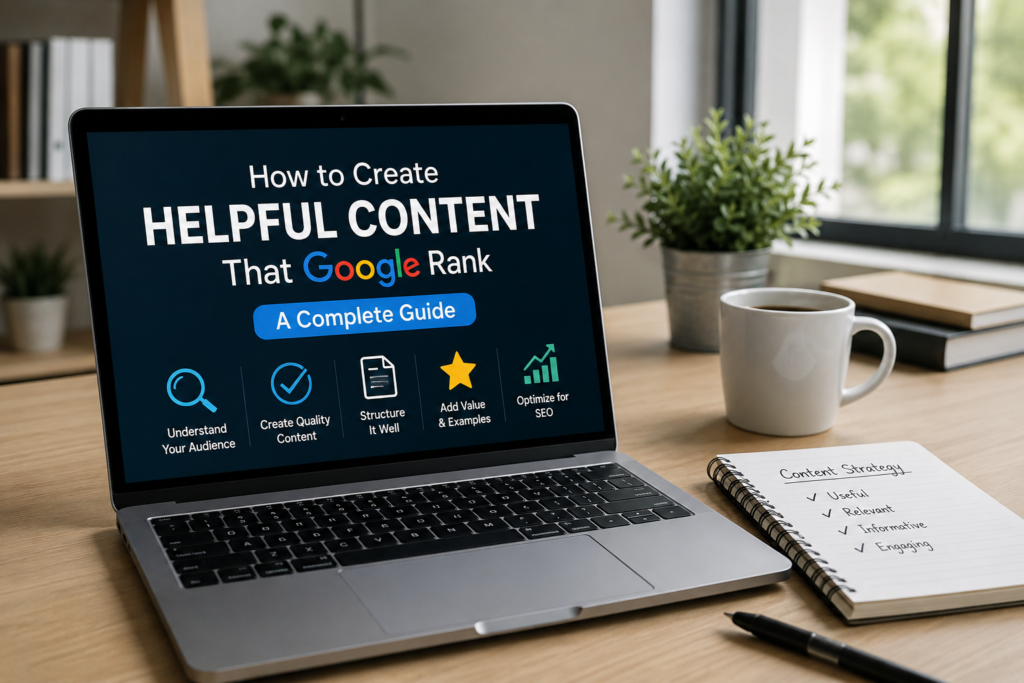
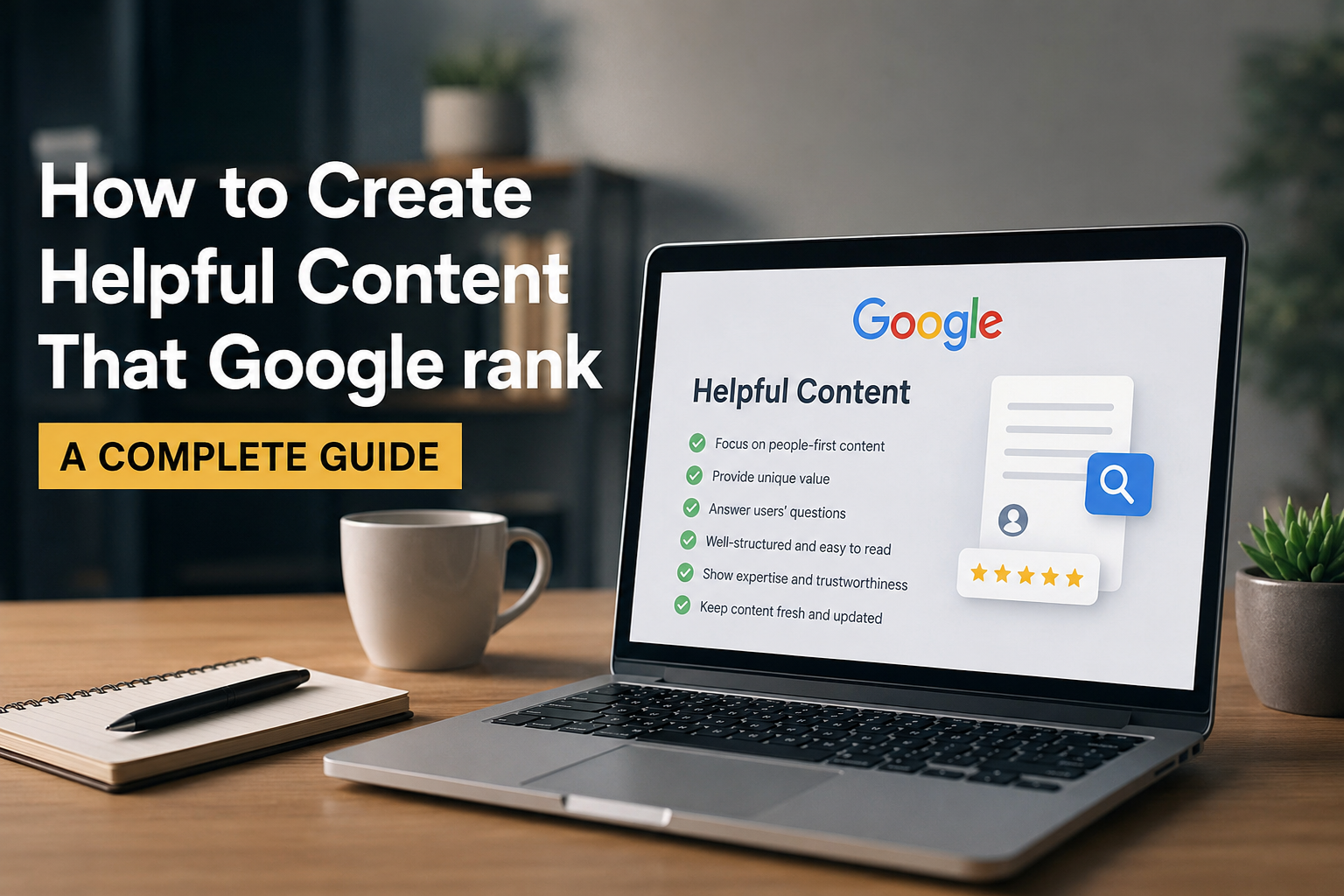
How to Create Helpful Content That Google rank A Complete Guide ? is no longer about stuffing keywords or publishing hundreds of low-quality articles. Google’s search algorithms have evolved significantly, focusing on delivering the most helpful, trustworthy, and user-friendly content to searchers. Websites that provide genuine value, answer users’ questions thoroughly, and demonstrate expertise are more likely to achieve higher rankings and long-term organic traffic.
If you want your content to perform well in Google Search, your primary goal should be helping people—not simply trying to manipulate search rankings. Google’s Helpful Content System rewards websites that consistently publish original, informative, and people-first content.
In this guide, you’ll learn proven strategies to create helpful content that satisfies users, builds authority, and improves your website’s SEO performance.
What Is Helpful Content?
Helpful content is content that genuinely solves a user’s problem or answers their question completely. It is written for humans first and search engines second.
Google defines helpful content as information that demonstrates experience, expertise, authoritativeness, and trustworthiness (E-E-A-T). Instead of producing generic articles filled with repeated information, helpful content offers unique insights, practical advice, accurate information, and a satisfying user experience.
For example, if someone searches for “How to start a vegetable garden,” they expect practical steps, tool recommendations, common mistakes, seasonal tips, and real-world advice—not just a short overview copied from other websites.
Understand Search Intent
One of the biggest reasons content fails is ignoring search intent.
Search intent refers to the reason behind a user’s search query. Before writing any article, ask yourself:
- What problem is the user trying to solve?
- What information are they expecting?
- What questions might they ask next?
- What action do they want to take?
Google generally categorizes search intent into four types:
- Informational: Learning something new.
- Navigational: Finding a specific website.
- Commercial: Comparing products or services.
- Transactional: Ready to buy or take action.
Matching your content with the correct intent significantly increases your chances of ranking well.
Perform Thorough Keyword Research
Keywords remain important, but they should guide your content rather than control it.
Use SEO tools such as Google Keyword Planner, Ahrefs, Semrush, or Ubersuggest to discover:
- Primary keywords
- Long-tail keywords
- Related search terms
- Frequently asked questions
- People Also Ask queries
Instead of targeting only high-volume keywords, focus on long-tail phrases that have clear user intent and lower competition.
For example:
Primary Keyword:
- Helpful content
Related Keywords:
- How to write helpful content
- Google Helpful Content Update
- SEO content writing
- Content writing tips
- People-first content
- Google ranking factors
Naturally include these keywords throughout your article without keyword stuffing.
Write for People First
Google repeatedly emphasizes creating people-first content.
This means your article should prioritize clarity, usefulness, and readability over SEO tricks.
Instead of writing:
“Our SEO company provides the best SEO services with professional SEO experts offering SEO solutions.”
Write:
“Our team helps businesses improve their Google rankings through technical SEO, keyword research, content optimization, and link building.”
The second version is more natural, informative, and easier to understand.
Demonstrate Experience and Expertise
Google values content written by people with real experience.
Whenever possible:
- Share personal examples.
- Include case studies.
- Explain real-world results.
- Add screenshots.
- Use original images.
- Mention lessons learned.
For example, instead of saying:
“Internal links improve SEO.”
Write:
“After adding strategic internal links to over 100 blog posts, we increased average page views by 35% and improved crawl efficiency.”
Real experience builds credibility.
Create Comprehensive Content
Helpful content answers every important question a reader may have.
Rather than publishing multiple short articles on similar topics, create comprehensive guides covering:
- Definitions
- Benefits
- Step-by-step instructions
- Best practices
- Common mistakes
- Frequently asked questions
- Expert tips
- Resources
Complete content keeps users engaged and reduces the need to return to Google for additional answers.
Make Your Content Easy to Read
Even the best information loses value if readers struggle to understand it.
Improve readability by:
- Using short paragraphs.
- Writing simple sentences.
- Including headings and subheadings.
- Adding bullet points.
- Using numbered lists.
- Highlighting key information.
- Breaking up large blocks of text.
Readable content improves user engagement and increases time spent on the page.
Add Original Value
Many websites simply rewrite information already available online.
Google prefers content that adds something new.
Ways to create original value include:
- Sharing personal experiences.
- Conducting original research.
- Creating custom graphics.
- Publishing surveys.
- Including expert interviews.
- Explaining complex topics with examples.
- Offering actionable tips.
Ask yourself:
“What unique information does my article provide that readers cannot easily find elsewhere?”
Optimize On-Page SEO
Helpful content still requires proper SEO optimization.
Ensure your article includes:
- A compelling SEO title.
- A descriptive meta description.
- Keyword-rich headings.
- Optimized images.
- Internal links.
- External links to trusted sources.
- Descriptive URLs.
- Image alt text.
These elements help search engines better understand your content while improving user experience.
Focus on E-E-A-T
Google uses E-E-A-T as a framework for evaluating content quality.
Experience
Show firsthand knowledge of the topic.
Expertise
Demonstrate deep understanding and accurate information.
Authoritativeness
Build authority through quality content, backlinks, and recognition.
Trustworthiness
Provide accurate information, cite reliable sources, maintain transparency, and keep your website secure.
Trust is the foundation of long-term SEO success.
Keep Content Updated
Outdated content can lose rankings over time.
Regularly update your articles by:
- Refreshing statistics.
- Adding new examples.
- Updating screenshots.
- Improving formatting.
- Including recent developments.
- Fixing broken links.
Google appreciates fresh, accurate, and relevant information.
Improve User Experience
Helpful content goes beyond writing.
Your website should also offer:
- Fast loading speed.
- Mobile-friendly design.
- Easy navigation.
- Clear fonts.
- Minimal intrusive ads.
- Secure HTTPS connection.
A positive user experience encourages visitors to stay longer and explore more pages.
Answer Related Questions
Include an FAQ section addressing common user questions.
Examples:
How long should helpful content be?
There is no ideal length. Content should be as detailed as necessary to answer the user’s question completely.
Does Google prefer AI-generated content?
Google evaluates content based on quality rather than how it was created. AI-assisted content can perform well if it is accurate, original, and genuinely helpful.
How often should I update my articles?
Review important articles every few months or whenever significant changes occur in your industry.
FAQs increase your chances of appearing in featured snippets and People Also Ask results.
Measure Content Performance
After publishing, monitor performance using tools like Google Search Console and Google Analytics.
Track important metrics such as:
- Organic traffic
- Click-through rate (CTR)
- Average position
- Bounce rate
- Engagement time
- Conversion rate
- Indexed pages
Analyze what performs well and continuously improve underperforming content.
Common Mistakes to Avoid
Avoid these common SEO mistakes:
- Keyword stuffing
- Copying competitor content
- Writing only for search engines
- Publishing thin articles
- Using clickbait titles
- Ignoring user intent
- Not updating old content
- Excessive advertising
- Poor website speed
- Weak internal linking
Eliminating these issues can significantly improve content quality.
conclusion
Creating helpful content that Google rewards requires a people-first mindset. Instead of chasing algorithms, focus on understanding your audience, solving their problems, and delivering genuine value. High-quality content combines accurate information, practical advice, strong organization, and an excellent user experience.
Remember that successful SEO is a long-term investment. Articles that are well-researched, original, trustworthy, and regularly updated are more likely to earn higher rankings, attract backlinks, and build lasting authority in your niche.
By following Google’s best practices—understanding search intent, demonstrating expertise, optimizing on-page SEO, improving readability, and continuously updating your content—you can create articles that both readers and search engines appreciate. When your content consistently helps users achieve their goals, Google is far more likely to reward your website with improved visibility, sustainable organic traffic, and long-term success.