Introduction
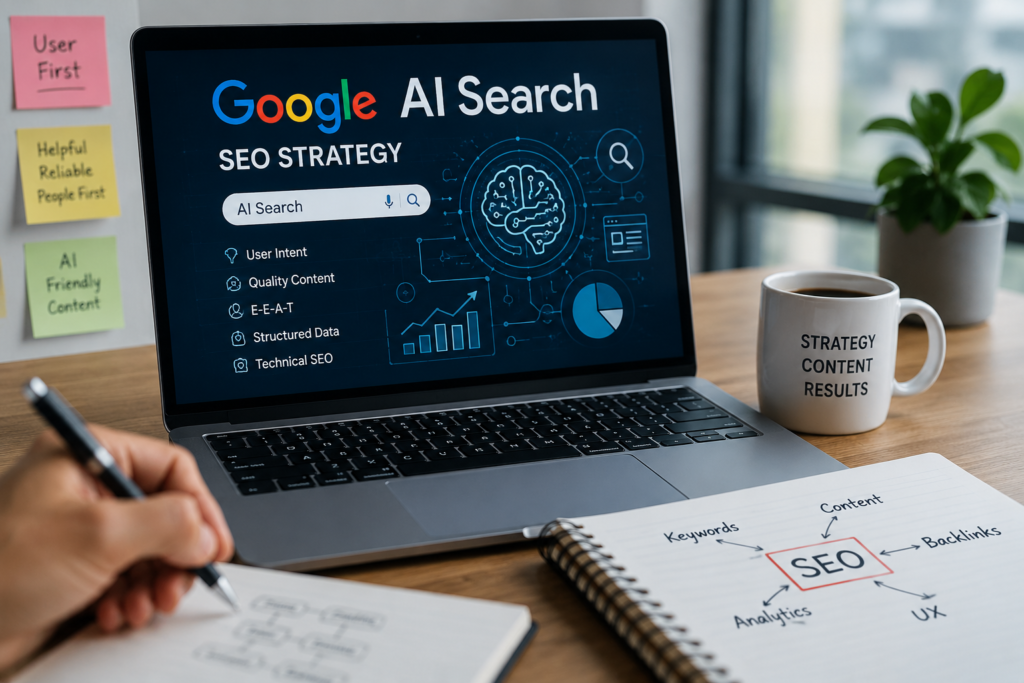
Google AI Search SEO Strategy is becoming important for businesses that want to improve their visibility in AI-powered search results. With Google’s AI features changing the way users find information, SEO professionals need new strategies to rank better.
This shift means that traditional SEO techniques alone are no longer enough. Ranking on the first page is still important, but websites also need to optimize their content so that Google’s AI can understand, trust, and cite it in AI-generated answers.
If you want your website to continue growing in 2026 and beyond, you need an SEO strategy designed specifically for Google AI Search. This guide explains the most effective techniques to improve your visibility, increase organic traffic, and build long-term authority.
What Is Google AI Search?
Google AI Search is Google’s AI-powered search experience that uses advanced language models to understand user intent and provide comprehensive answers. Instead of simply matching keywords, Google’s AI analyzes the meaning behind a search query and gathers information from multiple trusted sources to create a useful response.
This means your content must be accurate, well-structured, trustworthy, and genuinely helpful if you want it to appear in AI-generated search results.
Why Google AI Search Matters
Google processes billions of searches every day, and AI is becoming a major part of that experience. Websites optimized for AI Search can benefit from:
- Higher visibility
- More qualified organic traffic
- Better user engagement
- Increased authority
- Improved brand recognition
- Greater trust from both users and search engines
Businesses that adapt early are likely to have a competitive advantage as AI continues to reshape search.
1. Understand User Search Intent
The foundation of every successful SEO strategy is understanding what users actually want.
Before writing any content, ask:
- What problem is the user trying to solve?
- What questions are they asking?
- What information will satisfy their search?
For example:
Instead of writing:
SEO Tips
Create content like:
How to Improve Google AI Search Rankings in 2026
Specific, intent-focused content performs much better because it directly answers user needs.
2. Create Helpful and Original Content
Google’s AI prioritizes content that genuinely helps users.
Your content should:
- Solve real problems
- Include practical examples
- Offer unique insights
- Avoid unnecessary repetition
- Provide step-by-step explanations
Don’t publish articles simply because they contain keywords. Publish articles because they provide value.
3. Build Topical Authority
Google prefers websites that demonstrate expertise across an entire subject.
Instead of writing one article about SEO, create a complete content cluster.
Example:
- What is SEO?
- On-Page SEO Guide
- Technical SEO
- Local SEO
- Semantic SEO
- Keyword Research
- AI SEO Strategy
- Google AI Overviews
- E-E-A-T Guide
- Internal Linking Best Practices
Link these articles together using relevant internal links.
This signals to Google that your website is an authority on the topic.
4. Focus on E-E-A-T
Google evaluates content using E-E-A-T:
- Experience
- Expertise
- Authoritativeness
- Trustworthiness
To strengthen E-E-A-T:
- Include author information
- Share real experiences
- Add case studies
- Use original screenshots
- Cite reliable sources when appropriate
- Keep information updated
- Display contact information and business details
The more trustworthy your website appears, the more likely Google AI is to rely on it.
5. Answer Questions Clearly
Google AI loves content that answers questions directly.
Use headings such as:
- What is Google AI Search?
- How Does AI Search Work?
- Why Is AI SEO Important?
- How Can Beginners Improve Rankings?
After each heading, provide a concise answer before going into more detail.
This structure makes it easier for both users and AI systems to understand your content.
6. Use Semantic SEO
Keyword stuffing is outdated.
Instead, naturally include related terms such as:
- AI Search
- Google AI Overviews
- Search Intent
- Semantic Search
- Helpful Content
- Entity SEO
- Content Quality
- Natural Language Processing
- AI Optimization
Semantic SEO helps Google understand your content beyond a single keyword.
7. Structure Content Properly
Well-organized articles are easier to read and easier for AI to interpret.
Follow a clear structure:
- Introduction
- Definitions
- Benefits
- Step-by-step process
- Examples
- Common mistakes
- FAQs
- Conclusion
Use:
- H2 headings
- H3 subheadings
- Bullet points
- Numbered lists
- Short paragraphs
Good readability improves user experience and SEO.
8. Optimize for AI Overviews
AI Overviews often extract concise information from high-quality pages.
To improve your chances:
- Answer questions within the first few paragraphs.
- Use descriptive headings.
- Include definitions.
- Explain concepts clearly.
- Write in natural language.
- Cover topics comprehensively.
Avoid overly promotional language. Focus on helping users first.
9. Improve Technical SEO
Even great content may struggle if technical issues prevent Google from understanding your site.
Ensure that your website has:
- HTTPS security
- Fast loading speed
- Mobile-friendly design
- Clean URL structure
- XML Sitemap
- Robots.txt
- Canonical URLs
- Proper heading hierarchy
- Optimized images
- Core Web Vitals
Technical SEO creates a strong foundation for AI visibility.
10. Use Schema Markup
Structured data helps search engines understand the meaning of your pages.
Useful schema types include:
- Article
- FAQ
- HowTo
- Organization
- Person
- Breadcrumb
- Review (where applicable)
Schema does not guarantee AI visibility, but it provides additional context that can improve understanding.
11. Create Original Images
Visual content adds value for readers and can support search visibility.
Include:
- Custom illustrations
- Infographics
- Charts
- Screenshots
- Process diagrams
Always optimize image file names and descriptive alt text.
12. Strengthen Internal Linking
Internal linking means connecting one page of your website to another relevant page. This helps visitors easily discover related content and keeps them engaged for longer. It also helps Google understand how your content is organized, making it easier to crawl and index your website.
For example, if someone is reading a Google AI Search Guide, you can naturally recommend related topics such as:
- Google AI Search Guide
- → Semantic SEO
- → Keyword Research
- → Technical SEO
- → Content Marketing
- → Technical SEO
- → Keyword Research
- → Semantic SEO
This creates a clear content journey for both users and search engines. A well-planned internal linking strategy improves website navigation, increases page views, distributes SEO value across your pages, and strengthens your site’s topical authority.
13. Update Content Regularly
SEO is an ongoing process.
Review your important articles every few months and:
- Add new statistics
- Update screenshots
- Refresh outdated information
- Improve examples
- Expand sections that need more detail
Fresh, accurate content is more useful for users and search engines.
14. Build Brand Authority
Google increasingly values trusted brands.
You can strengthen your brand by:
- Publishing consistently
- Earning quality backlinks
- Collecting customer reviews
- Maintaining active social media profiles
- Demonstrating expertise through helpful resources
When people recognize and trust your brand, search engines are more likely to trust it as well.
15. Track Performance and Improve
Use tools such as:
- Google Search Console
- Google Analytics 4
- Google Trends
- Google Keyword Planner
- Ahrefs
- Semrush
- Screaming Frog
- PageSpeed Insights
Monitor impressions, clicks, rankings, engagement, and technical issues to identify opportunities for improvement.
Common Mistakes to Avoid
Many websites struggle because they rely on outdated tactics.
Avoid:
- Keyword stuffing
- Thin content
- Duplicate articles
- Poor readability
- Weak internal linking
- Slow loading pages
- Clickbait titles
- Publishing AI-generated content without editing
- Ignoring user intent
- Failing to update old content
Focusing on quality over quantity is far more effective.
The Future of SEO in the AI Era
Artificial intelligence will continue to influence search, but the core principle remains the same: create content that genuinely helps people.
Successful websites will combine:
- Helpful content
- Technical excellence
- Strong user experience
- Topical authority
- E-E-A-T
- Clear site architecture
- Continuous improvement
Rather than trying to “game” the algorithm, focus on becoming the best resource for your audience.
Conclusion
Google AI Search is changing the way people discover information online, creating new opportunities for websites that prioritize quality and trust. While traditional SEO fundamentals such as keyword research, technical optimization, and link building remain important, they now need to be combined with user-focused content, semantic relevance, topical authority, and strong E-E-A-T signals.
The most effective AI SEO strategy is simple: understand your audience, answer their questions thoroughly, organize your content clearly, keep it accurate and up to date, and build a website that users genuinely trust. By following these best practices consistently, you can improve your chances of appearing in both traditional search results and Google’s AI-powered experiences, driving sustainable organic growth for years to come.