Introduction
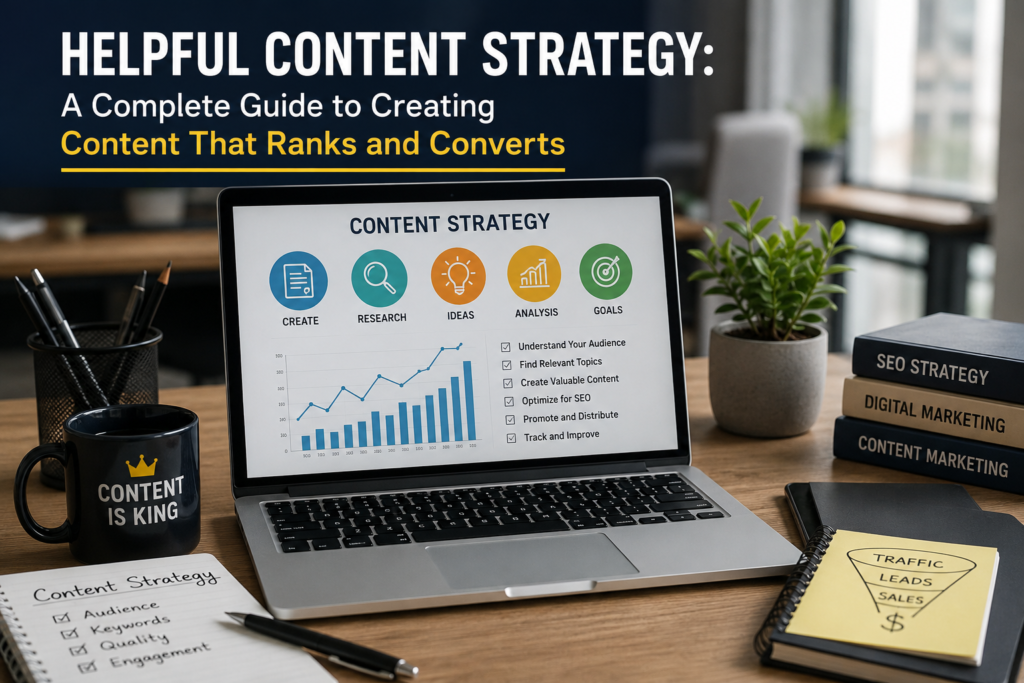
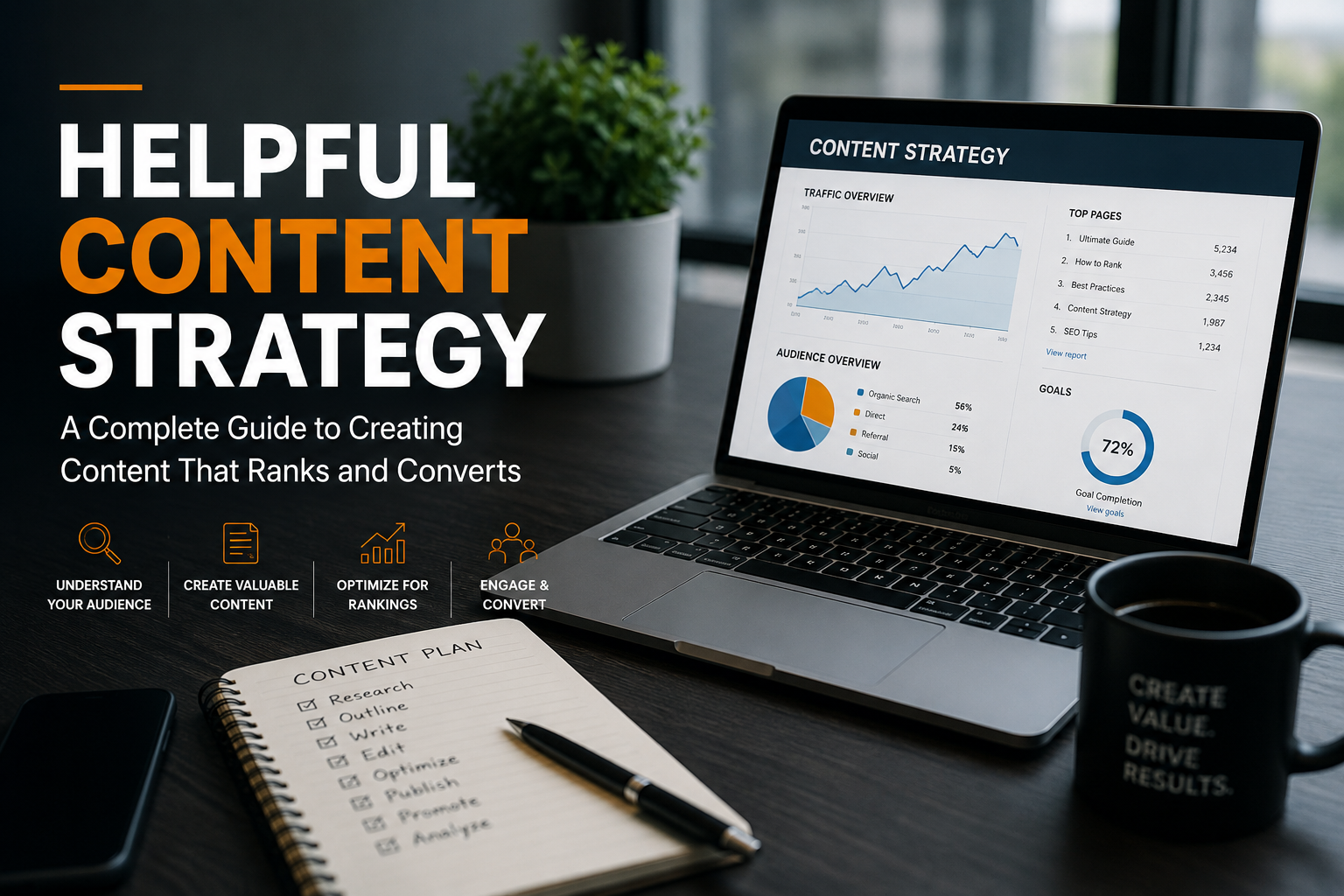
Helpful Content Strategy has become one of the most important parts of modern SEO and digital marketing. Search engines like Google are continuously improving their algorithms to understand user intent and reward content that provides real value. In today’s competitive online world, simply creating content with keywords is not enough. Businesses and creators need a strategic approach that focuses on solving user problems, answering questions, and delivering a better experience.
A successful helpful content strategy combines audience research, SEO optimization, expert knowledge, valuable information, and continuous improvement. Whether you run a business website, blog, eCommerce store, or personal brand, creating useful content can help increase organic traffic, build trust, and improve conversions.
This guide explains what helpful content strategy is, why it matters, and how you can create content that ranks higher on Google while providing real value to your audience.
What Is a Helpful Content Strategy?
A Helpful Content Strategy is a planned approach to creating content that is designed primarily for people rather than search engines. The goal is to provide accurate, useful, and meaningful information that helps users achieve their goals.
Instead of creating content only to rank for keywords, a helpful content strategy focuses on questions like:
- What problems does my audience have?
- What information are users searching for?
- How can my content provide a better solution?
- What unique experience or knowledge can I share?
For example, a website selling fitness products should not only create product pages. It should also publish helpful content like:
- Beginner workout guides
- Nutrition tips
- Exercise mistakes to avoid
- Product comparison guides
This type of content builds authority and helps users make better decisions.
Why Helpful Content Strategy Is Important for SEO
Google’s goal is to provide users with the most relevant and useful search results. Websites that consistently publish valuable content have a higher chance of gaining visibility in search results.
Here are some key benefits of a helpful content strategy:
1. Improves Search Engine Rankings
High-quality content helps search engines understand your website’s expertise. When your content answers user queries effectively, it can improve rankings for targeted keywords.
Google evaluates factors such as:
- Content quality
- User experience
- Expertise
- Originality
- Search intent satisfaction
Creating helpful content increases your chances of appearing on the first page of search results.
2. Builds Trust and Authority
Users trust websites that provide reliable and detailed information. When you consistently publish valuable content, your brand becomes recognized as an expert in your industry.
For example:
A digital marketing agency sharing detailed SEO guides, case studies, and marketing strategies can build more credibility compared to a website that only promotes services.
3. Increases Organic Traffic
Helpful content attracts visitors through search engines. A well-optimized blog post can continue generating traffic months or even years after publishing.
A strong content strategy helps you target:
- Informational keywords
- Long-tail keywords
- Problem-solving queries
- Industry-related searches
This creates consistent organic growth.
4. Generates More Leads and Conversions
Content is not only about traffic; it also helps convert visitors into customers.
Helpful content can guide users through different stages:
(a ) Awareness Stage:
Users discover your brand through educational content.
Example:
“What is SEO and how does it work?”
(b) Consideration Stage:
Users compare solutions.
Example:
“Best SEO Tools for Small Businesses”
(c) Decision Stage:
Users are ready to buy.
Example:
“Professional SEO Services for Businesses”
A strategic content approach supports the complete customer journey.
Key Elements of a Helpful Content Strategy
1. Understand Your Target Audience
Before creating content, understand who your audience is.
Research:
- Age group
- Interests
- Problems
- Goals
- Search behavior
- Buying challenges
Create audience personas to understand your ideal customers.
Example:
For a digital marketing course website:
Audience:
Students and beginners
Problems:
- How to start a digital marketing career?
- Which skills should they learn?
- How can they get practical experience?
Your content should answer these questions.
2. Perform Keyword Research
Keyword research helps you understand what people are searching for.
Use keyword research tools to find:
- High-search-volume keywords
- Low-competition keywords
- Question-based keywords
- Long-tail keywords
Examples:
Instead of targeting:

Target:
“How to start a digital marketing career in 2026”
Long-tail keywords usually have better search intent and conversion potential.
3. Focus on Search Intent
Search intent means understanding why someone is searching for something.
There are four main types of search intent:
Informational Intent
(a) Users want information.
Examples:
- What is SEO?
- How does Google Ads work?
(b) Navigational Intent
Users want to find a specific website.
Example:
- Facebook login
- Canva website
(c) Commercial Intent
Users are researching before buying.
Examples:
- Best SEO tools
- Best website development company
(d) Transactional Intent
Users are ready to take action.
Examples:
- Hire SEO expert
- Buy website design service
Creating content based on search intent improves user satisfaction.
4. Create Original and Valuable Content
Modern SEO requires originality. Avoid copying information from competitors.
Add unique value through:
- Personal experience
- Case studies
- Real examples
- Expert opinions
- Research data
- Step-by-step explanations
For example:
Instead of writing:
“SEO helps websites rank higher.”
Explain:
“How SEO improved a local business website’s traffic by implementing keyword optimization, technical SEO, and local search strategies.”
Specific examples make content more valuable.
5. Write Content That Solves Problems
The best content answers user problems.
Before publishing, ask:
- Does this content answer the user’s question?
- Is the information actionable?
- Can users apply these tips?
- Does it provide something better than existing content?
A helpful article should provide practical solutions, not just general information.
6. Optimize Content for SEO
Helpful content should also be optimized properly.
Important SEO elements include:
Title Optimization
Create clear and attractive titles.
Example:
Bad:
“SEO Guide”
Better:
“SEO Guide for Beginners: How to Improve Website Rankings in 2026”
(a) Keyword Placement
Use keywords naturally in:
- Title
- Introduction
- Headings
- Meta description
- Content body
Avoid keyword stuffing.
(b) Proper Headings
Use:
- H1 for the main title
- H2 for major sections
- H3 for subtopics
This improves readability and helps search engines understand content structure.
(c) Internal Linking
Connect related content on your website.
Example:
A blog about SEO tools can link to:
- Keyword research guide
- Technical SEO checklist
- Local SEO strategy
Internal links improve navigation and SEO performance.
7. Improve Content Readability
Even great information can fail if it is difficult to read.
Follow these practices:
- Use short paragraphs
- Add bullet points
- Include examples
- Use images and visuals
- Avoid complex language
- Add clear formatting
A good user experience keeps visitors engaged longer.
8. Add Experience and Expertise
Google values content created with real experience.
Show expertise through:
- Author information
- Real project examples
- Case studies
- Industry insights
- Data-backed recommendations
For example:
A web development company can share:
- Website redesign case studies
- Performance improvement results
- Development challenges solved
This builds credibility.
9. Update Old Content Regularly
Content becomes outdated over time.
Review old articles and update:
- Statistics
- Screenshots
- Links
- Examples
- Strategies
Updating existing content can improve rankings and maintain accuracy.
10. Measure Content Performance
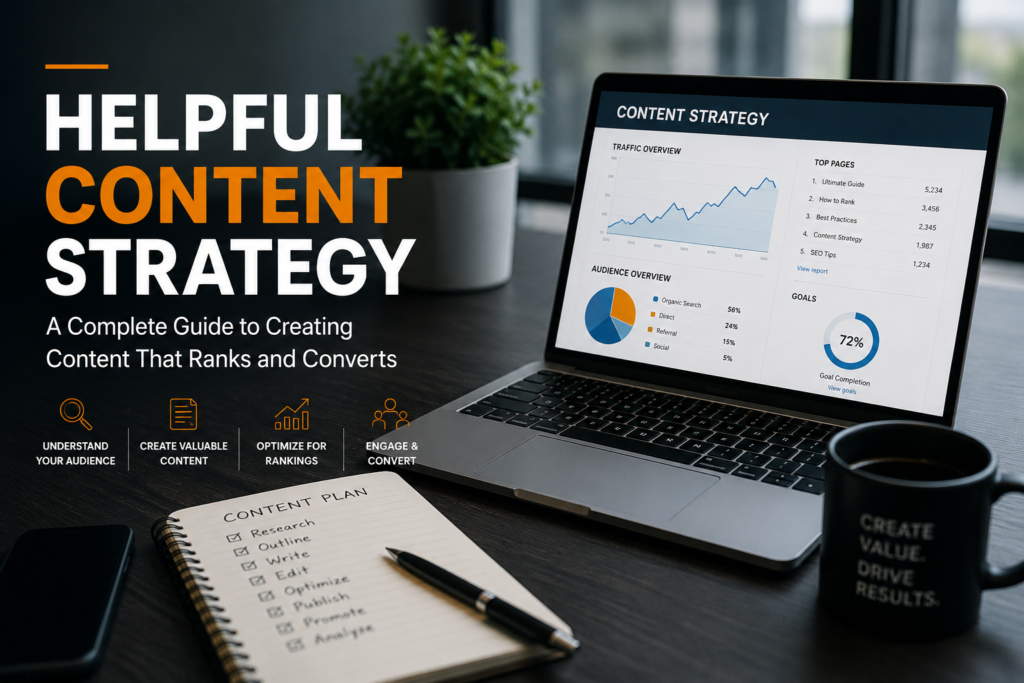
A successful content strategy requires tracking results.
Important metrics include:
(a) Organic Traffic
Shows how many visitors come from search engines.
(b) Keyword Rankings
Tracks your position for target keywords.
(c) Engagement Rate
Measures how users interact with your content.
(d) Conversion Rate
Shows how many visitors become customers.
Use tools like:
- Google Analytics
- Google Search Console
- SEO tools
to monitor performance.
Common Helpful Content Mistakes to Avoid
1. Writing Only for Search Engines
Adding keywords everywhere without providing value creates poor content.
Focus on users first.
2. Publishing Low-Quality Content Frequently
More content does not always mean better results.
One detailed, valuable article is better than many weak articles.
3. Copying Competitor Content
Search engines prefer original information.
Add your own perspective and expertise.
4. Ignoring User Intent
A keyword may have different meanings.
Always understand what users actually want.
5. Not Promoting Content
Even great content needs promotion.
Share content through:
- Social media
- Email newsletters
- Communities
- Industry websites
Future of Helpful Content Strategy
The future of content marketing will focus more on:
AI-Assisted Content Creation
AI tools can help with:
- Research
- Ideas
- Outlines
- Optimization
However, human expertise and creativity remain important.
User Experience Optimization
Search engines will continue prioritizing:
- Fast websites
- Mobile-friendly design
- Easy navigation
- Valuable information
Answer-Based Content
With AI search and voice search growth, content should answer questions clearly.
Examples:
- How-to guides
- FAQs
- Step-by-step tutorials
- Comparison articles
Conclusion
A Helpful Content Strategy is essential for achieving long-term SEO success. The focus has shifted from creating content only for rankings to creating content that genuinely helps people.
By understanding your audience, researching keywords, focusing on search intent, creating original information, optimizing SEO elements, and regularly improving your content, you can build a strong online presence.
The websites that succeed in the future will not be those that publish the most content but those that provide the most valuable experiences to users.
Creating helpful content is not just an SEO technique; it is a powerful strategy for building trust, increasing traffic, and growing your business online.