Introduction
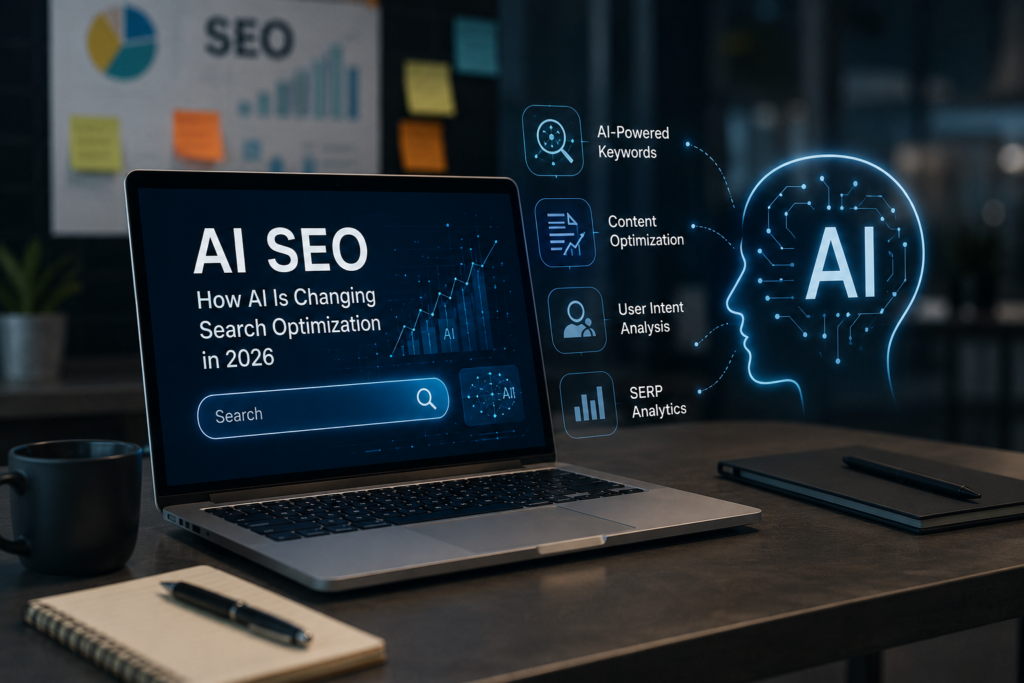
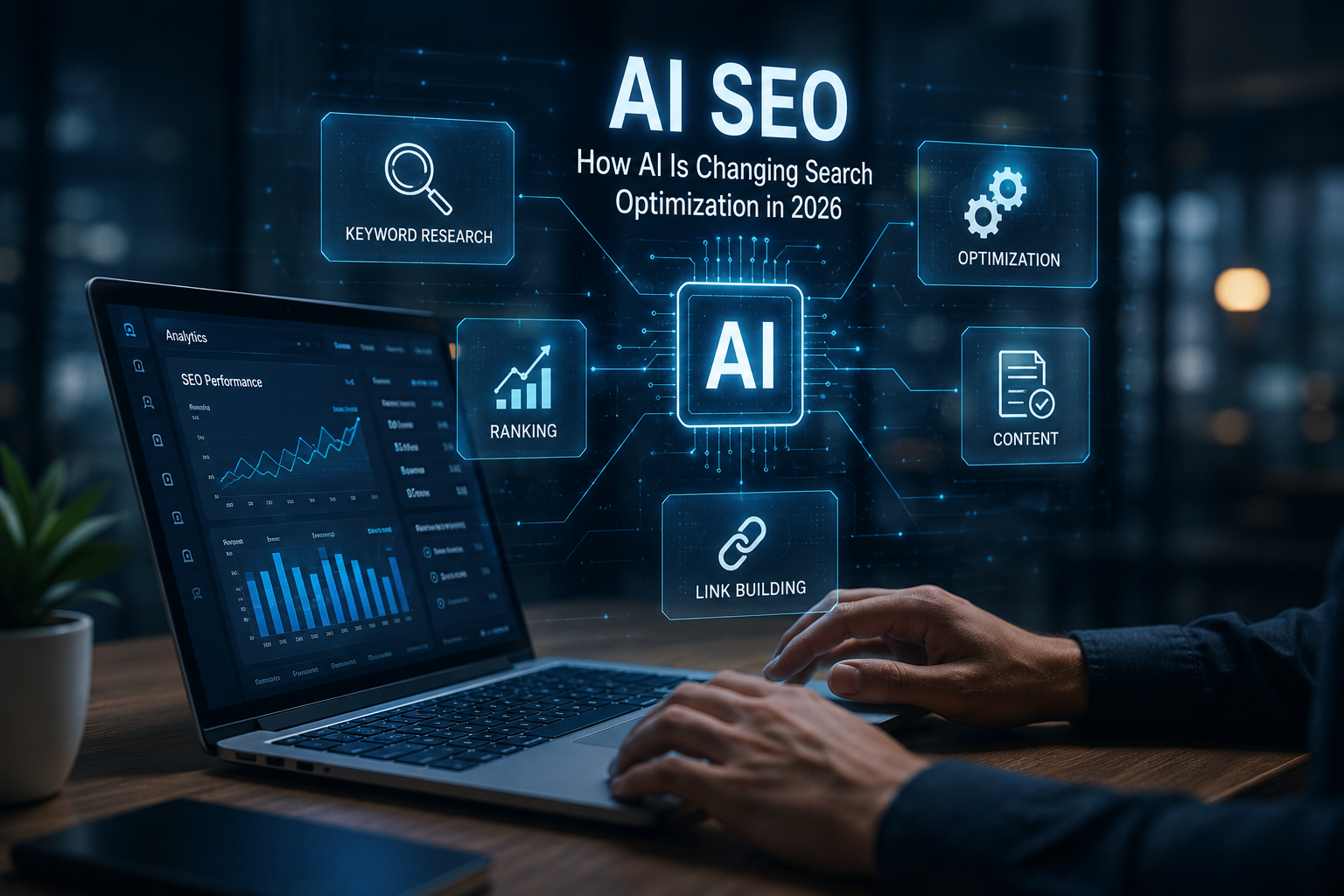
AI SEO Revolution: Transforming Search Optimization in 2026 ? Search Engine Optimization (SEO) has always evolved alongside search engines. From keyword stuffing and backlink-focused strategies to user experience and helpful content, every major update has changed how websites compete for visibility. Today, artificial intelligence (AI) is driving the biggest transformation SEO has seen in years.
Search engines are no longer limited to matching keywords. AI-powered systems now understand user intent, context, content quality, expertise, and conversational language. At the same time, AI tools are helping marketers create content faster, analyze competitors, automate keyword research, optimize technical SEO, and improve overall digital marketing strategies.
The rise of AI-powered search experiences like Google AI Overviews, ChatGPT Search, Microsoft Copilot, and Gemini means businesses must rethink their SEO approach. Simply ranking on Google’s first page is no longer enough. Brands must optimize for AI-generated answers, voice search, semantic relevance, and user satisfaction.
In this guide, you’ll learn how AI is transforming SEO, why it matters, its benefits and challenges, and the best strategies to succeed in the future of search.
What Is AI Search Engine Optimization ?
AI SEO refers to using artificial intelligence to improve search engine optimization while also optimizing websites for AI-powered search engines and search experiences.
Instead of relying solely on traditional keyword optimization, AI SEO focuses on:
- Understanding search intent
- Semantic search optimization
- Natural language processing (NLP)
- Content quality analysis
- User behavior prediction
- Automated SEO tasks
- Personalized search experiences
AI helps both search engines and marketers.
Search engines use AI to deliver better search results, while marketers use AI tools to create better content and optimize websites more efficiently.
Why AI Is Transforming Search Optimization
Modern search engines are becoming answer engines rather than simple search engines.
Instead of displaying only blue links, AI can now generate direct answers, summarize web pages, compare products, and explain complex topics.
This means SEO is no longer about ranking for keywords alone.
Today’s SEO success depends on:
- Creating comprehensive content
- Demonstrating expertise
- Matching user intent
- Providing helpful experiences
- Building trust and authority
- Optimizing structured information
AI rewards websites that genuinely help users rather than those trying to manipulate rankings.
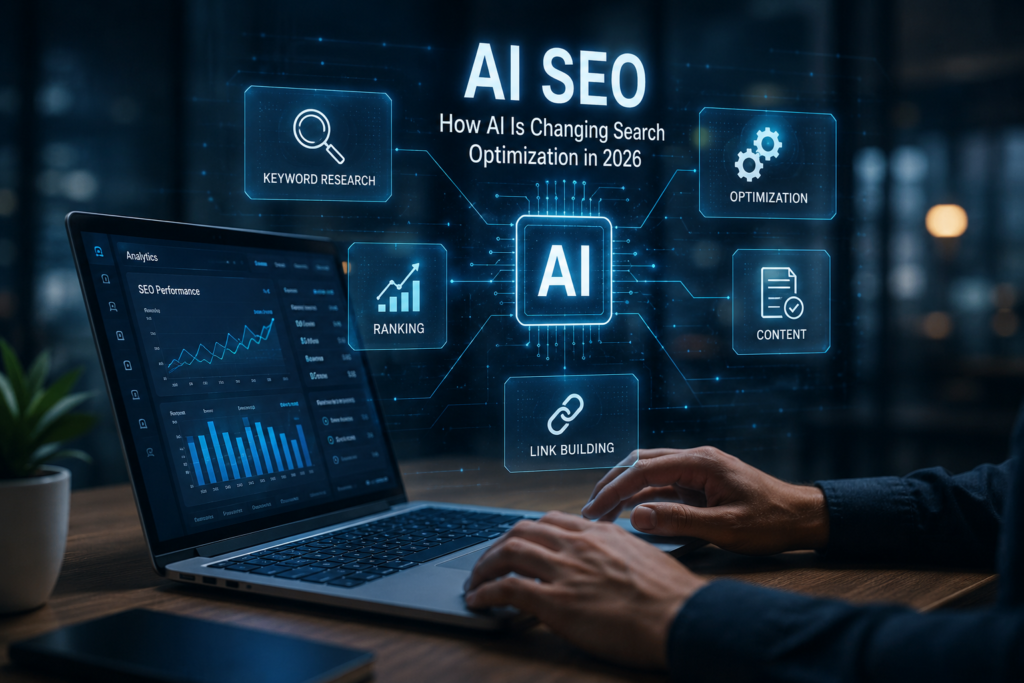
How AI Is Changing Search Engine Optimization
1. Search Intent Is More Important Than Keywords
Earlier SEO strategies focused heavily on exact-match keywords.
For example:
Old SEO:
Best running shoes
Modern AI Search:
What are the best running shoes for beginners with flat feet?
AI understands the complete meaning behind searches rather than individual words.
Instead of repeating keywords throughout a page, websites should answer real user questions naturally.
Best Practices
- Focus on user intent
- Write naturally
- Cover topics comprehensively
- Answer common questions
2. AI Understands Context
Modern search engines understand:
- Synonyms
- Related concepts
- User behavior
- Previous searches
- Context
For example:
A page about “Apple” may refer to:
- Apple Inc.
- Apple fruit
- Apple Watch
- Apple iPhone
AI uses context to determine which meaning is correct.
This makes topical relevance much more important than keyword repetition.
3. Content Quality Matters More Than Ever
AI can evaluate:
- Originality
- Readability
- Expertise
- Content depth
- Structure
- Trustworthiness
Thin articles with little value are less likely to perform well.
High-quality content typically includes:
- Research
- Statistics
- Examples
- Images
- FAQs
- Actionable advice
- Updated information
The goal is to solve the user’s problem better than competing pages.
4. AI-Powered Content Creation
AI writing tools have become valuable assistants for marketers.
Popular AI SEO tools include:
- ChatGPT
- Claude
- Gemini
- Jasper
- Copy.ai
- Surfer Search Engine Optimization
- Frase
- MarketMuse
These tools can help:
- Generate blog ideas
- Create outlines
- Improve readability
- Write meta descriptions
- Suggest keywords
- Rewrite content
- Generate FAQs
However, AI-generated content should always be reviewed and enhanced with human expertise to ensure accuracy, originality, and value.
5. Semantic SEO Is Becoming Essential
Semantic SEO means covering an entire topic rather than focusing on one keyword.
Instead of writing only about:
“Digital Marketing”
You also cover:
- Search Engine Optimization
- PPC
- Social Media
- Content Marketing
- Email Marketing
- Analytics
- AI Marketing
- Automation
This helps AI understand your website as an authority on the subject.
6. AI Is Improving Keyword Research
Keyword research tools now use AI to identify:
- Search intent
- Keyword clusters
- Related topics
- User questions
- Long-tail keywords
- Competitor gaps
Instead of targeting one keyword, marketers now build comprehensive topic clusters.
Example:
Main Topic:
AI SEO
Supporting Articles:
- AI SEO tools
- AI content optimization
- AI keyword research
- AI search ranking factors
- AI Overviews optimization
This strengthens topical authority.
7. Personalized Search Results
AI personalizes search based on:
- User location
- Search history
- Device
- Language
- Interests
- Behavior
Two people searching for the same query may see different results.
Businesses should therefore optimize for local Search Engine Optimization, mobile users, and audience-specific content.
8. Voice Search Optimization
Voice assistants continue to influence how users search online.
People speak differently than they type.
Instead of typing:
“best restaurant Delhi”
They ask:
“What is the best family restaurant near me that’s open right now?”
Voice search optimization includes:
- Conversational language
- FAQ sections
- Natural sentences
- Local SEO
- Fast-loading websites
9. AI Overviews Are Changing Click Behavior
AI-generated search summaries often answer questions directly on the search results page.
This means:
- Some searches receive fewer website clicks.
- Visibility in AI-generated summaries becomes increasingly valuable.
To increase your chances of being referenced:
- Publish accurate information.
- Use clear headings.
- Include structured data.
- Answer questions directly.
- Build topical authority.
- Maintain trustworthy, updated content.
10. Technical Search Engine Optimization Is Becoming Smarter
AI also evaluates technical website quality.
Important factors include:
- Page speed
- Mobile optimization
- HTTPS security
- Crawlability
- Structured data
- Internal linking
- Clean website architecture
A technically sound website allows search engines to understand and index content more effectively.
Benefits of AI SEO
1.Faster Content Creation
AI helps marketers create outlines, optimize headlines, generate metadata, and accelerate the writing process while allowing humans to focus on strategy and expertise.
Better Keyword Analysis
AI identifies:
- Search trends
- Long-tail keywords
- Related searches
- User intent
- Competitor opportunities
This leads to smarter content planning.
2.Improved Content Optimization
AI tools can recommend:
- Better headings
- Improved readability
- Missing topics
- Internal links
- Content gaps
These insights make pages more comprehensive.
3.Time Savings
Many repetitive SEO tasks can now be automated, such as:
- Meta descriptions
- Image alt text suggestions
- Content briefs
- Keyword grouping
- SEO audits
This allows teams to spend more time on strategic work.
4.Enhanced User Experience
AI helps optimize:
- Content organization
- Personalized recommendations
- Navigation
- Search functionality
A better user experience often leads to improved engagement and stronger SEO performance.
Challenges of AI SEO
1.AI-Generated Content Quality
AI can produce inaccurate, repetitive, or generic information if used without review.
Human editing remains essential to ensure quality and trust.
2.Increased Competition
AI tools make content creation easier for everyone.
As a result, publishing more content alone is no longer enough—content must offer unique insights and genuine value.
3.Frequent Search Changes
AI-driven search experiences evolve rapidly.
SEO professionals need to stay informed and adapt their strategies as search engines introduce new features and ranking considerations.
4.Risk of Over-Automation
Relying entirely on AI can reduce originality and brand voice.
The most effective approach combines AI efficiency with human creativity and expertise.
Best AI SEO Strategies for 2026
1.Create Helpful Content
Write content that solves real user problems and answers questions thoroughly.
2.Build Topical Authority
Develop interconnected articles around a subject to demonstrate expertise.
3.Optimize for Search Intent
Understand whether users want information, products, comparisons, or solutions, and align your content accordingly.
4.Use AI as an Assistant
Leverage AI for research, outlines, optimization, and brainstorming, while ensuring final content reflects human judgment and originality.
5.Improve Technical SEO
Maintain a fast, secure, mobile-friendly website with clean architecture and structured data.
6.Focus on User Experience
Reduce bounce rates and increase engagement by improving navigation, readability, and page performance.
7.Add FAQs
FAQ sections help answer specific questions clearly and can improve visibility for conversational queries.
8.Update Existing Content
Refresh articles regularly with new examples, statistics, screenshots, and insights to keep them relevant.
9.Optimize for AI Search
Structure content using:
- Clear headings
- Bullet points
- Tables where appropriate
- Concise summaries
- Definitions
- Direct answers
Well-organized content is easier for AI systems to interpret.
10.Monitor Performance
Track:
- Organic traffic
- Keyword rankings
- Click-through rate (CTR)
- User engagement
- Conversion rates
Use analytics tools to refine your strategy based on real performance.
Popular AI SEO Tools
Some widely used tools that support AI-driven SEO workflows include:
| Tool | Primary Use |
| ChatGPT | Content ideation, drafting, optimization |
| Gemini | Research and content assistance |
| Claude | Long-form writing and editing |
| Surfer SEO | On-page optimization |
| Frase | Content briefs and optimization |
| Clearscope | Content relevance analysis |
| Semrush | Keyword research and competitive analysis |
| Ahrefs | Backlink analysis and SEO insights |
| Screaming Frog | Technical SEO audits |
| Google Search Console | Performance monitoring and indexing insights |
Each tool serves a different purpose, and many teams combine several to streamline research, optimization, and reporting.
The Future of AI SEO
The future of SEO will be shaped by increasingly intelligent search experiences. Businesses that embrace AI while maintaining high editorial standards will be better positioned to earn visibility.
Key trends include:
- More conversational search
- Greater emphasis on expertise and trust
- AI-generated search summaries
- Personalized search experiences
- Multimodal search (text, image, voice, and video)
- Continued importance of technical SEO
- Stronger focus on user satisfaction and content quality
SEO professionals will shift from simply optimizing pages to building authoritative knowledge resources that AI systems can confidently reference.
Conclusion
Artificial intelligence is fundamentally reshaping search optimization. Success in SEO is no longer defined by keyword density or link volume alone. Instead, it depends on understanding user intent, creating comprehensive and trustworthy content, maintaining technical excellence, and delivering an outstanding user experience.
AI is a powerful ally for research, content planning, optimization, and automation—but it cannot replace human expertise, creativity, and strategic thinking. The most successful businesses will use AI to work smarter while continuing to produce original, helpful, and reliable content.
By focusing on quality, topical authority, user intent, and continuous improvement, organizations can adapt to the evolving search landscape and achieve sustainable organic growth in the AI-driven era of SEO.