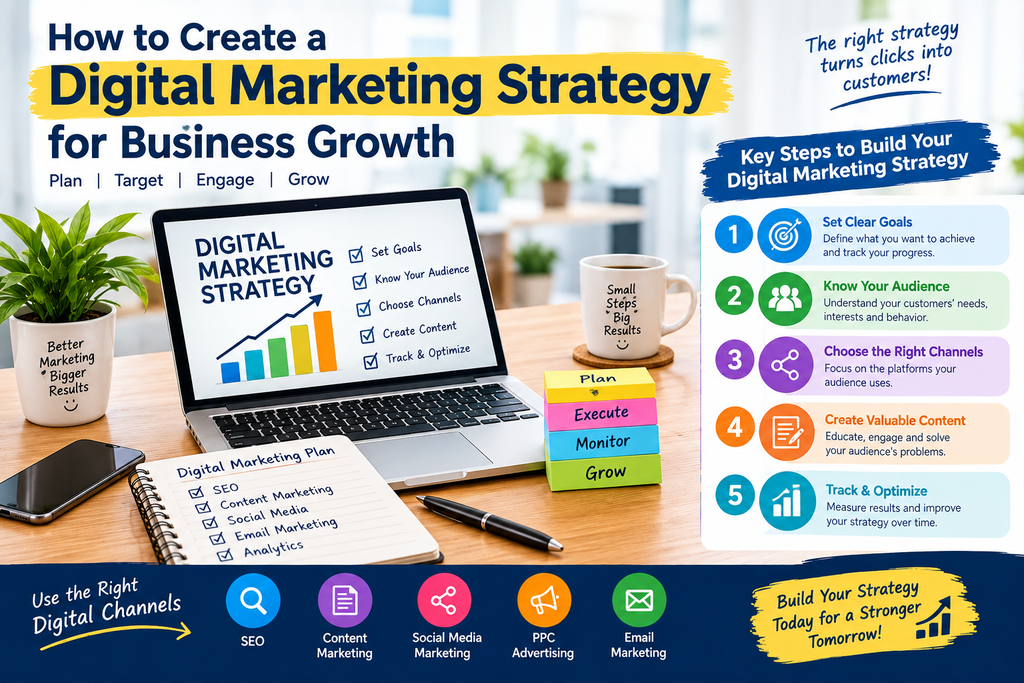
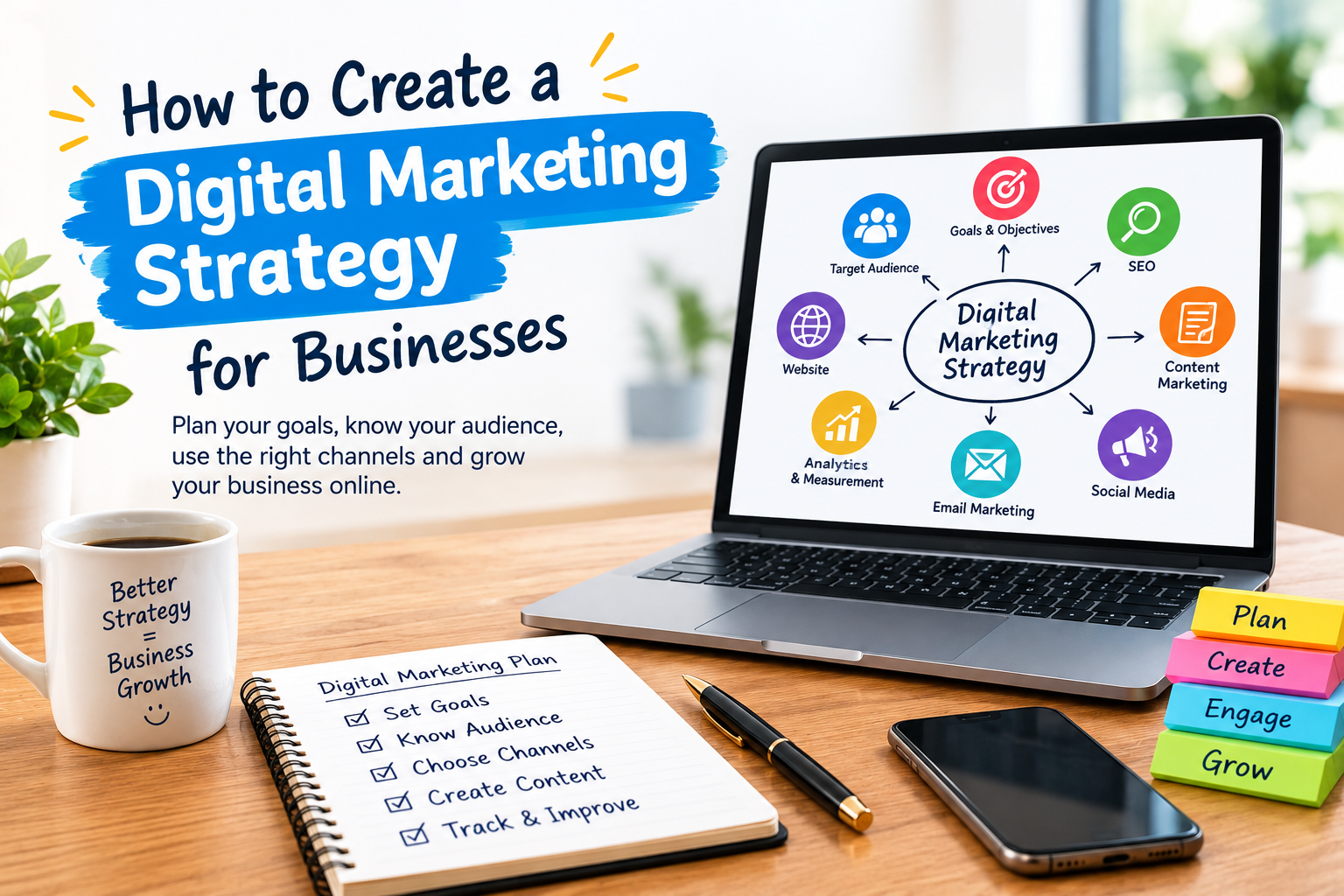
Digital Marketing Strategy for Businesses Businesses today have little choice but to have a robust online reputation. Consumers rely on search engines, social media, websites, email, and online reviews to find brands, compare products and make a purchasing decision. That’s a huge benefit for businesses to use digital marketing to connect with their target audience and establish long-lasting connections.
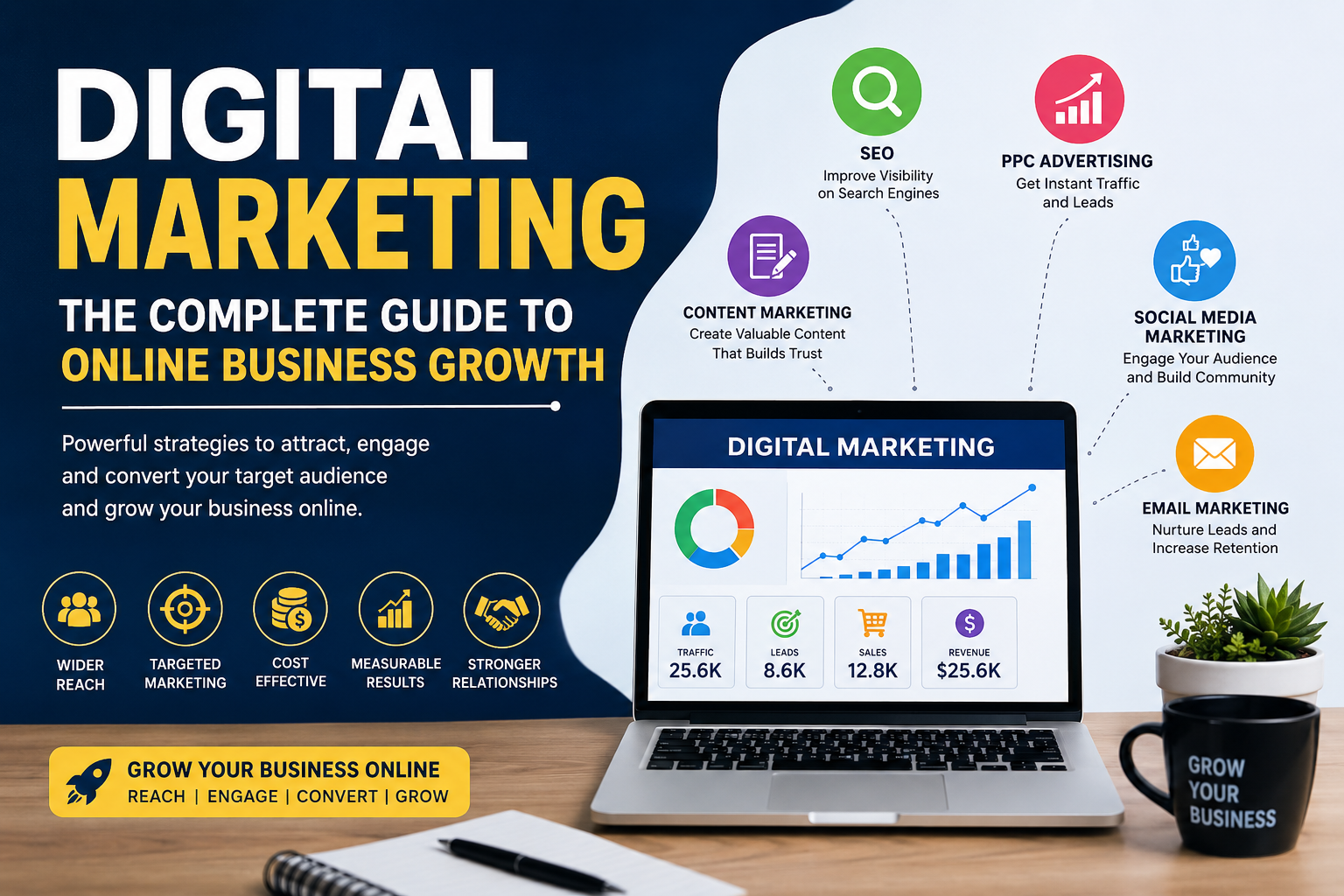
But being active online isn’t enough of a guarantee to success. The key for businesses is to have a clear digital marketing strategy that aligns their objectives, their target audience, their content, their marketing channels, and their measurement. Creating memorable experiences for customers is achieved by the effective use of resources with a well planned strategy.
Laying the groundwork for a Digital Marketing Strategy becomes essential.It becomes crucial to know the importance of a Digital Marketing Strategy.
A digital marketing strategy is a plan that outlines how a business will leverage the internet and digital channels to meet its marketing and business goals. These channels can range from search engines, social media, emails, websites, online advertising, content marketing and much more.
Establishing clear business and marketing objectives
The first step in any successful digital marketing strategy is to have clearly defined goals. Digital marketing businesses require to know what they have to achieve with digital marketing before picking platforms or even developing content.
Some businesses might want to drive more traffic to their website, while others may try to drive leads, boost online sales, raise brand awareness or to keep existing customers. The goals should be specific and measurable to allow for a measurement of progress over time.
For instance, if a business sets a target to ‘increase website traffic,’ it could target a specific percentage of organic website traffic growth that is to be achieved within a period of six months. Likewise, an ecommerce business could aim to boost its online sales by enhancing its conversion rate.
Providing clear objectives helps marketing teams have a direction and can judge if their digital marketing is delivering meaningful results.
Defining and comprehending the target audience.
One of the key aspects of digital marketing is understanding your target audience. Without knowledge of who their customers are, what they need, and what factors are affecting their buying habits, businesses can’t communicate with customers effectively.
Factors to consider for businesses include age, location, interests, profession, income level, online behavior, challenges, and buying preferences. Surveys can be done with customers, Analytics data from the website, Social Media data, Reviews, Market Research are all useful to gain information.
Another benefit of customer persona is that it enables marketers to better visualize their perfect customers. A customer persona is a description of an average member of a target audience and may contain their objectives, issues, preferences, and online behaviors.
With an understanding of their audience, companies can tailor their content to be more relevant and find marketing channels that customers rely on.
Establishing a solid and easy-to-use website.
Websites are the cornerstone of a business’s online marketing campaign. All this can lead potential customers to the website through social media posts, Google search results, ads, and email campaigns.
The web design should be user-friendly, aesthetically pleasing, mobile responsive, and quick to deliver a positive user experience. It should also be clear what the business has to offer, and why customers would want to select the business.
Elements of a website could be the clarity of the product/service information, ease of site navigation, compelling call-to-actions, contact details, customer reviews, popular and frequently asked questions, and helpful content.
During the development of the website, search engine optimization should also be taken into account. By having well-structured pages, relevant keywords, useful content, description oriented headings, and technically sound pages, search engines will be able to understand the website and enhance its visibility in the search engines.
Creating an effective Content Marketing Strategy
With content marketing, businesses can educate,and engage their target audience. Rather than building on the premise of direct promotion, companies can build content that addresses purchaser questions, resolves issues, and offers valuable information.
Content marketing can include blog posts, videos, infographics, social media posts, case studies, podcasts, newsletters, and guides.
A fitness business can write content focusing on health, fitness, exercise, and diet, for instance. A software company can develop tutorials, industry guides, and educational videos for the customers to understand the solutions.
Content that is most effective is typically developed with a clear and distinct audience and purpose. Rather than churning out significant amounts of content, businesses should be mindful of quality and relevance.
Using SEO to Improve Online Visibility
Search engine optimization, commonly known as SEO helps businesses improve their visibility when potential customers search for information, products or services online.
A strong SEO strategy involves understanding what customers search for and creating content that addresses those searches. Keyword research, on-page optimization, technical SEO, internal linking, quality content and authoritative backlinks can all contribute to search visibility.
SEO is particularly valuable because it can attract people who’re already interested in a particular product, service or topic. However it is important to remember that SEO is a long-term marketing activity. Businesses should focus on providing useful content and improving their websites rather than expecting immediate results.
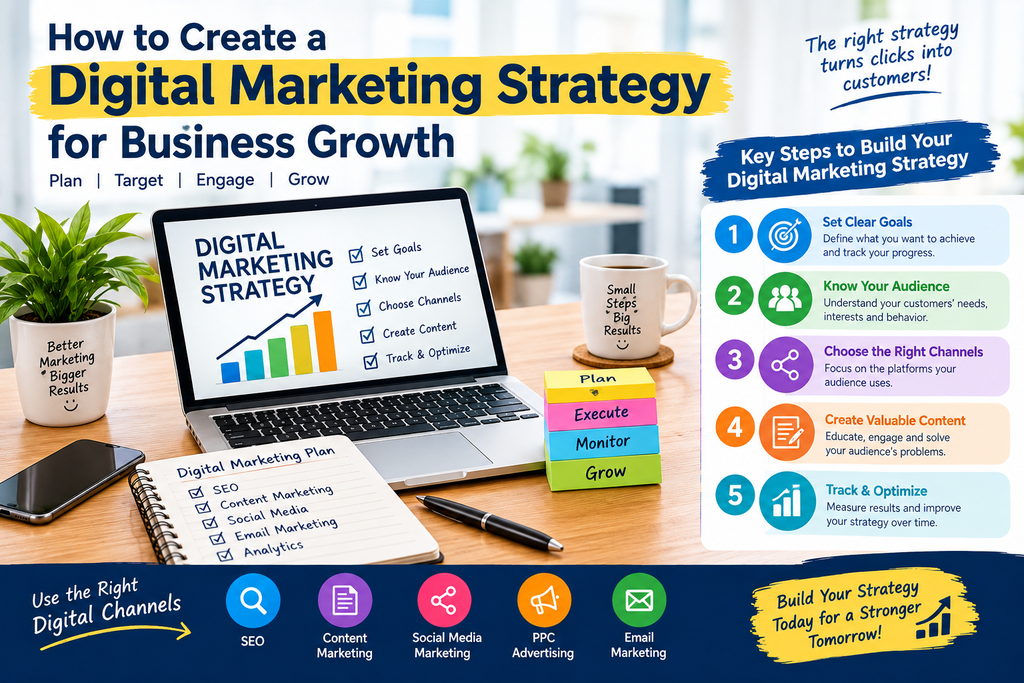
Choosing the Right Social Media Platforms
media gives businesses an opportunity to communicate directly with their audiences and build a recognizable brand personality. However businesses do not necessarily need to be active on every media platform.
The right platforms depend on the target audience, industry, content format and marketing objectives. A business targeting professionals may benefit from networking platforms while a visually focused brand may find image- and video-based platforms more effective.
Businesses should develop a social media presence while adapting content to each platform. Educational posts, videos, customer stories, behind-the-scenes content, polls and industry insights can help maintain audience engagement.
Social media should not be treated as an advertising channel. Responding to comments answering questions and interacting with followers can help businesses build relationships with their audiences.
Making Email Marketing Part of the Strategy
Email marketing remains a way to maintain relationships with existing and potential customers. Unlike media, where businesses depend on platform algorithms email allows brands to communicate directly with people who have chosen to receive their messages.
Businesses can use email marketing to share newsletters, product updates, special offers, educational content, event announcements and personalized recommendations.
Successful email campaigns usually provide value than sending promotional messages too frequently. Businesses should also segment their email lists when possible so that subscribers receive content that’s relevant to their interests and stage in the customer journey.
Creating a Consistent Brand Message
Consistency plays a role in building a recognizable digital brand. Customers may encounter a business through its website, social media profile, advertisement, search result or email campaign. The brand should feel familiar across each of these touchpoints.
Businesses should maintain consistency in their identity, tone of voice, messaging, colors and overall customer experience. A clear brand identity helps customers recognize the business and can contribute to trust and credibility.
At the time consistency does not mean every piece of content needs to look identical. Businesses can adapt their communication style to platforms while maintaining the same core brand values and message.
Using Paid Advertising
Organic marketing methods such as SEO and content marketing can take time to produce results. Paid digital advertising can help businesses reach audiences more quickly.
Platforms such as search advertising and social media advertising allow businesses to target audiences based on factors such as interests, demographics, search intent, location and online behavior.
However businesses should not invest in paid advertising without understanding their objectives. Expected return. Advertising campaigns should have goals, compelling messaging, relevant landing pages and appropriate tracking.
Testing advertisements can also help businesses identify which headlines, images, offers and audiences generate the best results.
Measuring Performance With Data and Analytics
One of the advantages of digital marketing is the ability to measure performance. Businesses can track metrics such as website traffic, engagement, leads, conversions, email open rates, advertising performance and sales.
However collecting data is not enough. Businesses need to identify which metrics are actually connected to their objectives.
For example a large number of social media likes may look impressive. They may not contribute directly to sales or leads. A smaller campaign that generates leads may provide much greater business value.
Regular performance analysis allows businesses to understand what is working and make improvements based on evidence than assumptions.
Improving the Strategy Through Continuous Testing
Digital marketing is constantly changing. Customer behavior, search trends, technology, social media platforms and advertising environments can all evolve over time. This means a digital marketing strategy should not remain unchanged.
Businesses should regularly review their results and experiment with ideas. They can test content formats, advertising messages, landing pages, email subject lines and calls to action.
This process of testing and optimization helps businesses learn what works best for their audience. Even small improvements can make a difference when they are applied consistently over time.
Building a Long-Term Digital Marketing Approach
A strong digital marketing strategy should focus on growth rather, than short-term results alone. Businesses should aim to build an audience strengthen their brand reputation create content and develop lasting customer relationships.
It is also important to align marketing with the broader business strategy. Marketing should support sales, customer service, brand development and overall business growth than operating as a completely separate activity.
Businesses that remain consistent customer-focused and willing to adapt are more likely to succeed in a competitive digital environment.
Conclusion
Creating a digital marketing strategy goes beyond just sharing posts on social media or running online ads. Companies must first know what they want to achieve. They need to figure out who their customers are make sure their website works well and share content that really helps people. Getting found in search engines is also important. Choosing the channels, for promotion matters too.. Tracking results makes sure everything is working as it should.
The best plans focus on customers. Stay open to change. Businesses should keep checking how things are going pay attention to what customers do and shift their methods when trends shift. Digital marketing doesn’t stop after one campaign. It keeps going. When companies set a path and keep making small improvements they can show up more online reach the right people earn trust and grow over time.