Skip to content
Introduction
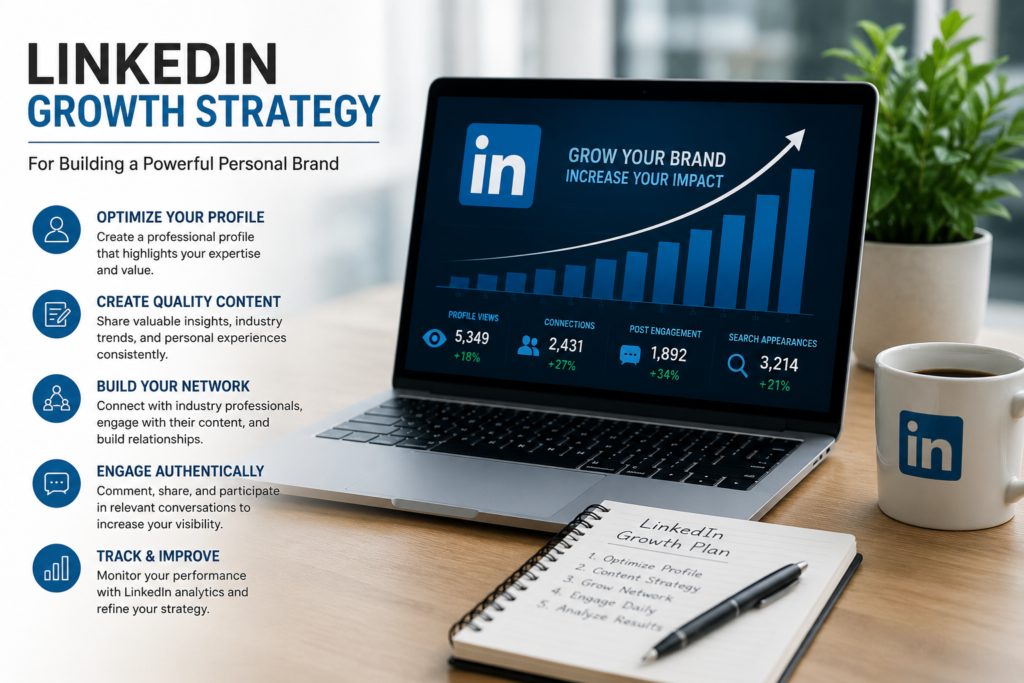
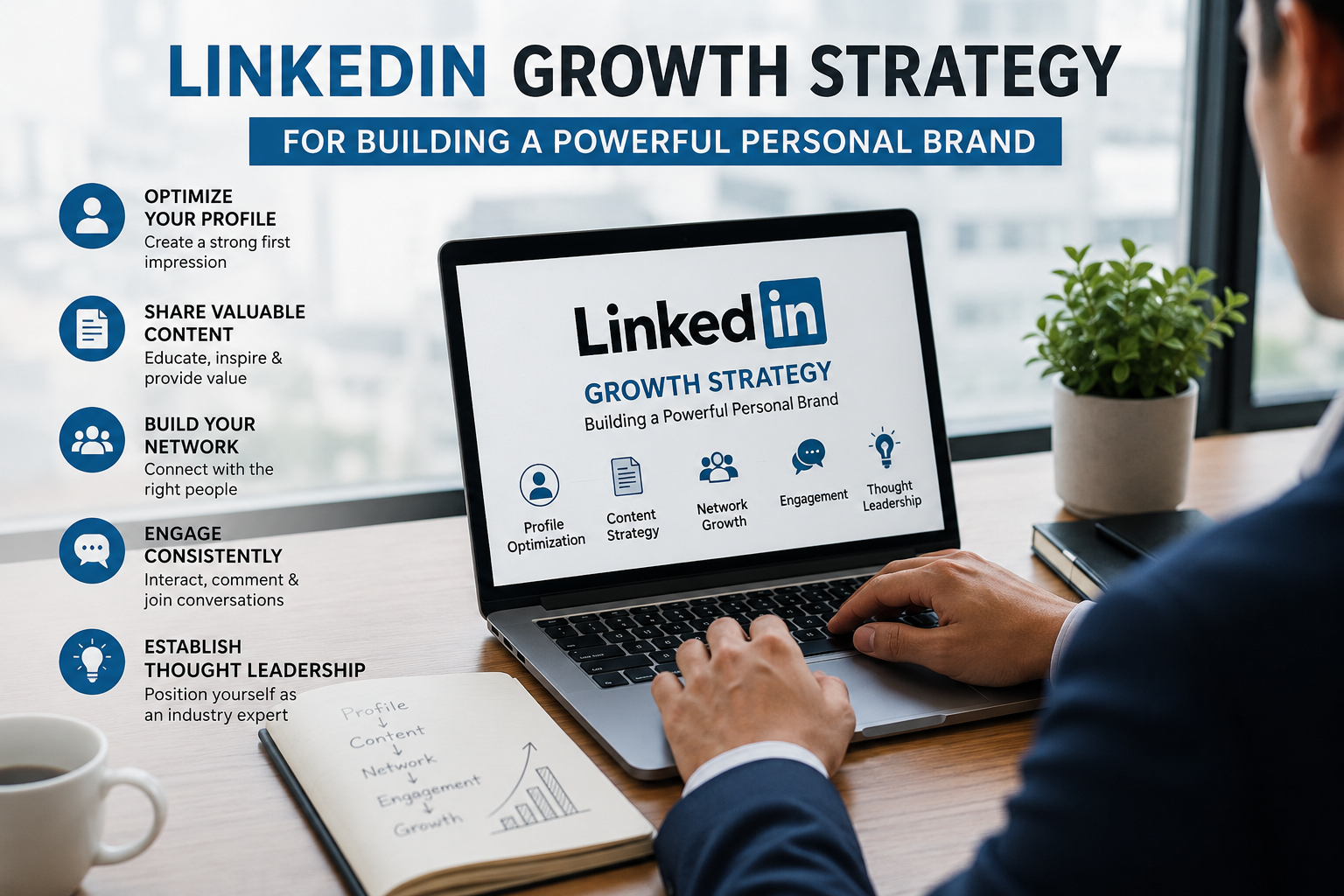
LinkedIn Growth Strategy: Build a Powerful Personal Brand in 2026 ? is the foundation of building a strong personal brand, attracting high-quality leads, and creating valuable professional opportunities in today’s digital world. With millions of professionals actively sharing insights, networking, and hiring talent, LinkedIn has evolved far beyond a job search platform. Whether you’re a freelancer, entrepreneur, marketer, business owner, or job seeker, having a well-planned LinkedIn growth strategy can help you increase your visibility, build authority, and generate consistent opportunities. In this guide, you’ll learn the most effective LinkedIn growth techniques, profile optimization tips, content strategies, networking methods, and best practices that can help you grow your LinkedIn presence organically in 2027.
What is a LinkedIn Growth Strategy?
A LinkedIn Growth Strategy is a structured plan to increase your professional presence, expand your network, improve engagement, and achieve specific goals on LinkedIn.
Your goals may include:
- Building a personal brand
- Generating B2B leads
- Finding clients
- Growing company awareness
- Recruiting talent
- Landing job opportunities
- Becoming an industry thought leader
Instead of randomly posting content, a growth strategy focuses on consistent actions that produce long-term results.
Why LinkedIn Matters in 2027
LinkedIn continues to be one of the most valuable social platforms for professionals because it offers:
- High-quality business audience
- Better organic reach than many social media platforms
- Decision-makers from every industry
- Strong networking opportunities
- Excellent B2B lead generation
- Professional credibility
- Career development opportunities
Businesses are investing heavily in LinkedIn marketing because professional audiences have higher buying intent than users on entertainment-focused platforms.
Step 1: Optimize Your LinkedIn Profile
Your profile is your digital business card.
A complete profile increases trust and improves search visibility.
Use a Professional Profile Photo
Choose a clear headshot with:
- Good lighting
- Friendly expression
- Professional clothing
- Simple background
Profiles with professional photos receive significantly more profile views.
Create a Powerful Headline
Instead of writing:
Digital Marketer
Write something more specific like:
SEO Expert | Helping Businesses Increase Organic Traffic | Content Marketing & Google Ads Specialist
Your headline should explain:
- What you do
- Who you help
- Your expertise
Write an Engaging About Section
Your About section should answer:
- Who are you?
- What problems do you solve?
- What experience do you have?
- What makes you different?
- How can people contact you?
Use storytelling instead of listing qualifications.
Add Featured Content
Include:
- Blog posts
- Case studies
- Portfolio
- Website
- Videos
- Testimonials
This builds credibility.
Step 2: Define Your Target Audience
Growing quickly requires speaking to the right people.
Examples include:
- Business owners
- Marketing agencies
- HR professionals
- Startup founders
- Students
- Recruiters
- CEOs
- E-commerce brands
The more focused your audience, the better your engagement.
Step 3: Build a Strong Content Strategy
Content is the engine behind LinkedIn growth.
Create content that educates, inspires, or solves problems.
Popular content types include:
(a) Educational Posts
Teach something valuable.
Example:
- SEO tips
- Marketing strategies
- AI tools
- Career advice
(b) Personal Stories
People connect with experiences.
Share:
- Success stories
- Failures
- Lessons learned
- Business journey
Authenticity increases engagement.
(c) Industry Insights
Comment on:
- Latest trends
- New updates
- Platform changes
- Market research
This positions you as an expert.
(d) Case Studies
Share real results.
Example:
- Increased traffic by 150%
- Generated 500 leads
- Improved conversion rates
- Reduced advertising costs
Numbers attract attention.
(e) Carousel Posts
LinkedIn carousel documents continue to perform well because they’re easy to consume.
Topics include:
- Step-by-step guides
- Checklists
- Frameworks
- Marketing strategies
(f) Videos
Short videos often receive strong engagement.
Topics:
- Marketing tips
- AI tutorials
- Website audits
- Business advice
Keep videos informative and concise.
Step 4: Post Consistently
Consistency matters more than frequency.
A practical posting schedule is:
- 3–5 quality posts per week
- 1 article every month
- Daily comments
- Weekly polls
- Monthly newsletter
Avoid posting multiple times a day without a strategy.
Step 5: Focus on High-Quality Content
Every post should provide value.
Ask yourself:
- Does this solve a problem?
- Is it actionable?
- Is it easy to read?
- Would I share this?
High-value content gets saved and shared more often.
Step 6: Improve Your Writing Style
LinkedIn readers scan quickly.
Use:
- Short paragraphs
- Simple language
- Bullet points
- Clear formatting
- Strong opening hook
Example opening:
Most LinkedIn users don’t fail because of poor content.
They fail because nobody stops scrolling.
Hooks increase reading time.
Step 7: Use Strategic Keywords
LinkedIn functions like a search engine.
Include relevant keywords in:
- Headline
- About section
- Experience
- Skills
- Posts
Examples:
- Digital Marketing
- SEO Consultant
- Content Marketing
- Google Ads Expert
- Web Development
- Social Media Marketing
Keywords improve discoverability.
Step 8: Engage Every Day
Growth isn’t only about posting.
Spend time:
- Commenting on industry posts
- Answering questions
- Congratulating connections
- Joining discussions
- Supporting creators
Meaningful engagement increases profile visibility.
Step 9: Grow Your Network
Connect with relevant professionals.
Send personalized connection requests instead of generic ones.
Example:
“Hi Sarah, I enjoyed your recent post about AI marketing. I’d love to connect and learn more from your insights.”
Quality connections outperform random networking.
Step 10: Publish LinkedIn Articles
Long-form articles establish authority.
Topics may include:
- Marketing guides
- Industry research
- Business case studies
- SEO tutorials
- Leadership lessons
Articles continue generating traffic over time.
Step 11: Use Visual Content
Visuals improve engagement.
Try:
- Infographics
- Charts
- Branded graphics
- Before-and-after results
- Screenshots
- Documents
Strong visuals make posts more memorable.
Step 12: Analyze Your Performance
Monitor:
- Impressions
- Reach
- Engagement rate
- Profile views
- Follower growth
- Click-through rate
- Connection requests
Identify which content performs best and create more of it.
Step 13: Build Authority Through Consistency
Authority grows gradually.
People trust creators who consistently:
- Teach
- Help
- Share insights
- Provide solutions
Focus on long-term credibility instead of chasing viral posts.
Step 14: Leverage LinkedIn Newsletters
LinkedIn newsletters help you build a loyal audience.
Benefits include:
- Subscriber notifications
- Better visibility
- Consistent readership
- Thought leadership
- Repeat engagement
Publish valuable newsletters regularly.
Step 15: Encourage Conversations
Instead of ending posts with a statement, ask a question.
Examples:
- What’s your biggest marketing challenge?
- Which AI tool do you use most?
- Do you agree with this strategy?
Questions naturally increase comments and engagement.
Common LinkedIn Growth Mistakes
Avoid these common errors:
- Incomplete profile
- Posting only promotional content
- Ignoring comments
- Buying followers
- Sending spam messages
- Posting inconsistently
- Copying other creators
- Using too many hashtags
- No clear niche
- Low-quality visuals
Consistency and authenticity always outperform shortcuts.
Best Tools for LinkedIn Growth
Useful tools include:
- Canva for graphics
- ChatGPT for content ideas
- Shield Analytics for performance tracking
- Buffer for scheduling
- Hootsuite for social media management
- Grammarly for writing improvement
- Notion for content planning
These tools streamline your workflow while maintaining quality.
Future LinkedIn Trends in 2027
Stay ahead by adapting to these trends:
- AI-assisted content creation
- Video-first professional content
- Personal branding over company branding
- Employee advocacy
- Interactive polls
- Educational carousels
- Community-driven engagement
- Creator-focused algorithms
- Thought leadership newsletters
- Authentic storytelling
Professionals who embrace these trends will likely see stronger growth and engagement.
Conclusion
A successful LinkedIn Growth Strategy isn’t about gaining thousands of followers overnight—it’s about building trust, sharing consistent value, and creating meaningful professional relationships. Optimize your profile, define your audience, publish valuable content, engage with your network, and track your performance regularly. By focusing on quality over quantity and staying consistent, you can grow your LinkedIn presence organically, strengthen your personal brand, attract clients or recruiters, and unlock new career and business opportunities throughout 2027 and beyond.